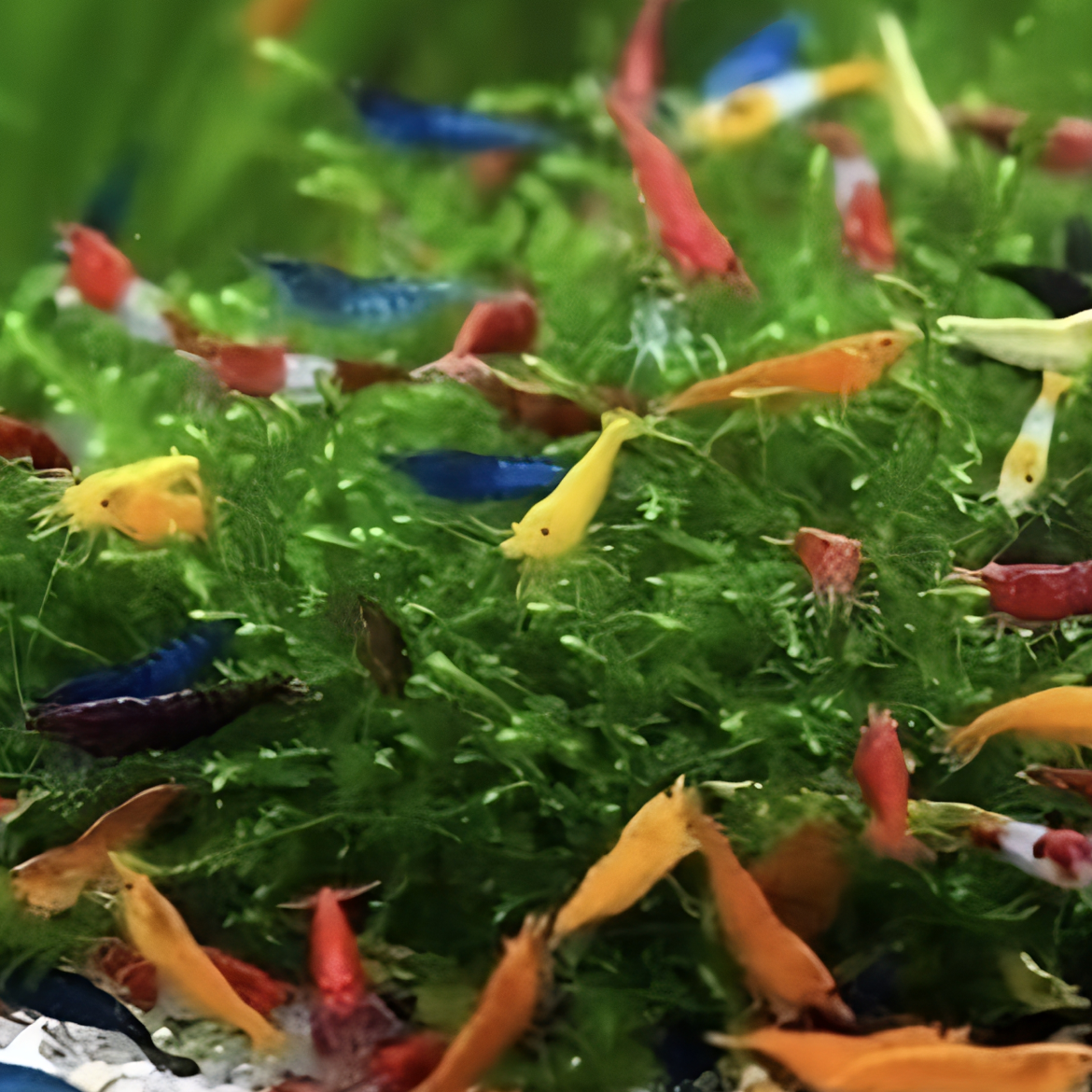
Neocaridina Skittles Shrimp for Sale
Want one shrimp multipack with multiple colors instead of committing to a single color line? Our Skittles Shrimp are a live assortment of colorful Neocaridina davidi selected to create a bright, active mix in freshwater aquariums.
Each Skittles shrimp multipack gives you the fun of seeing different colors and patterns throughout the tank while keeping the beginner-friendly care, peaceful behavior, algae grazing, and freshwater breeding that make Neocaridina so popular.
Mixed-color multipackMultiple Neocaridina colors in one pack.
Breeding-age sizeApproximately 1/2–1 inch.
Pack choices5 shrimp, 10 shrimp, 20 shrimp, or Breeder Pack.
Beginner-friendlyHardy freshwater shrimp when kept in a mature, stable tank.
Breeder Pack: 10 total shrimp with a planned ratio of 7 females and 3 males, designed for hobbyists who want to start a breeding colony. Because Skittles are mixed-color Neocaridina, offspring colors will be variable rather than breeding as one pure color line.
Already know you love Neocaridina but want to compare individual colors? Explore our Neocaridina Shrimp collection.
What Are Skittles Shrimp?
Skittles Shrimp are an assorted mix of freshwater Neocaridina shrimp chosen for color variety. Instead of purchasing a tank of only red, blue, yellow, or green shrimp, you receive a mixed display that can create a rainbow effect across plants, wood, rock, and substrate.
They are still Neocaridina davidi, so their care is broadly the same as other common Neocaridina color morphs. They stay small, spend much of the day grazing, are peaceful with each other, and can reproduce completely in freshwater.
Aquarists use several names for this style of assortment, including skittle shrimp, skittle pack shrimp, skittles pack shrimp, multipack shrimp for sale, Skittles Neocaridina shrimp, Neocaridina shrimp skittles, rainbow Neocaridina shrimp, and assorted Neocaridina shrimp. They all describe the same basic idea: a colorful mixed Neocaridina colony instead of one single-color strain.
What Colors Are Included in a Skittles Shrimp Pack?
The exact assortment can vary from pack to pack based on the healthy shrimp available when your order is selected. That variety is part of the appeal of a Skittles mix.
Your assortment can draw from colorful Neocaridina lines such as red, blue, yellow, green, orange, patterned, and other available color morphs. Exact colors and the number of shrimp of each color should not be expected to be identical in every pack.
If you want one specific color instead of a mixed assortment, compare individual lines such as:
If your goal is maximum visual variety rather than maintaining a pure breeding line, a mixed Skittles multipack is usually the better fit.
Skittles Shrimp Water Parameters
Neocaridina are considered adaptable freshwater shrimp, but stable water matters more than constantly chasing an exact number.
Our Shrimp Up Aquatics Neocaridina systems are maintained around:
| Parameter |
Our Tank Range |
| pH |
7.0–7.8 |
| GH |
7–8 dGH |
| KH |
3–4 dKH |
| TDS |
200–250 ppm |
| Temperature |
65–74°F |
| Ammonia |
0 ppm |
| Nitrite |
0 ppm |
Your aquarium does not have to match our numbers perfectly. What matters is keeping Neocaridina within an appropriate range and avoiding sudden swings.
For a detailed explanation of GH, KH, pH, TDS, temperature, and stability, read our Neocaridina Shrimp Water Parameters Guide.
Tank Size & Setup
A Skittles shrimp colony can live in a relatively compact aquarium, but beginners usually benefit from a little extra water volume because larger tanks change more slowly.
For most new keepers, a 5- to 10-gallon or larger fully cycled aquarium is a practical starting point. Focus less on minimum tank size and more on stability, mature filtration, and grazing area.
A Simple Skittles Shrimp Setup
-
Filter: A mature sponge filter is ideal because it provides gentle biological filtration and a grazing surface.
-
Plants: Mosses and other live plants provide cover and biofilm. Browse our aquatic plants.
-
Hardscape: Driftwood and shrimp-safe rock create additional surface area for grazing.
-
Substrate: Inert sand or gravel works well when it supports your intended water chemistry.
-
Cover: Moss, plants, and wood help freshly molted shrimp and newborn shrimplets feel secure.
For layout ideas, see our Neocaridina Shrimp Tank Aquascaping Guide.
What Do Skittles Shrimp Eat?
Skittles Neocaridina are constant grazers. In a mature aquarium they naturally pick at biofilm, soft algae, microorganisms, decaying plant material, and fine organic particles.
Natural grazing is valuable, but a growing colony also benefits from appropriately portioned supplemental food. A varied diet can include shrimp-specific foods, algae- and spirulina-based foods, botanicals, and occasional appropriate protein.
Browse our shrimp food and botanicals for feeding and natural-grazing options.
Do not overfeed. More food does not automatically mean faster breeding. Uneaten food can break down and hurt water quality.
Are Skittles Shrimp Good for Beginners?
Yes. Neocaridina are among the most beginner-friendly freshwater shrimp when the aquarium is fully cycled before the shrimp are added.
They are popular first shrimp because they are small, peaceful, adaptable, easy to feed, and do not require the specialized low-KH setup associated with many ornamental Caridina.
The easiest way to make Neocaridina difficult is to put them into an immature tank or repeatedly change the water chemistry. Stable conditions make a major difference.
If this is your first colony, read our Beginner's Guide to Keeping Neocaridina Shrimp.
Will Skittles Shrimp Breed Together?
Yes. The different colors in a Skittles pack are Neocaridina color morphs, so mature males and females can breed with each other.
Females carry eggs beneath the abdomen until miniature fully formed shrimplets hatch. No brackish-water larval stage is required.
If your primary goal is breeding, choose the Breeder Pack option above. It contains 10 shrimp with a planned ratio of 7 females and 3 males.
For a full colony-building walkthrough, read our Complete Neocaridina Shrimp Breeding Guide.
What Colors Will Skittles Shrimp Babies Be?
This is one of the most important things to understand before buying a mixed Neocaridina colony.
The babies are not guaranteed to match the original rainbow of parent colors.
Different Neocaridina color strains have been selectively bred for specific traits. When those color lines breed together, their genetics recombine. Early generations may produce interesting mixed colors and patterns, but over time you can also see more transparent, brown, muted, or wild-type coloration.
If you want to preserve a pure Blue Dream, Fire Red, Yellow Golden Back, or Green Jade line, keep that color in its own aquarium.
If you want a fun mixed colony where the offspring are part of the surprise, Skittles shrimp are a great choice.
Skittles Shrimp Tank Mates
Skittles Shrimp are peaceful. The bigger question is whether the other animals in the aquarium are peaceful toward the shrimp.
Adult Neocaridina may coexist with carefully selected peaceful nano fish and snails, but almost any fish that can fit a newborn shrimplet in its mouth may eat it.
For maximum breeding success, a shrimp-only tank is the safest setup.
If you keep fish with your Skittles shrimp, provide dense plants, moss, wood, and other hiding areas. Expect lower baby survival than you would see in a dedicated shrimp tank.
Why Choose a Skittles Shrimp Pack?
-
More color from one purchase: Build a mixed display without selecting several individual color listings.
-
Every tank looks different: The assortment creates natural visual variety.
-
Beginner-friendly Neocaridina care: Great for first-time shrimp keepers with a properly cycled tank.
-
Active aquarium inhabitants: Neocaridina spend much of the day grazing across aquarium surfaces.
-
Freshwater breeding: Mature males and females can reproduce directly in freshwater.
-
Pack sizes for different goals: Choose 5, 10, 20, or the 10-shrimp Breeder Pack above.
Want a colorful mixed Neocaridina colony?
Select your 5-, 10-, 20-shrimp, or Breeder Pack above and add your Skittles Shrimp to cart.
Live livestock orders are covered according to our Live Arrival Guarantee / DOA Policy. Please review the policy before ordering.
Buy Live Neocaridina Skittles Shrimp Online
If you have been looking for skittle shrimp for sale, skittles shrimp for sale, multipack shrimp for sale, mixed Neocaridina shrimp for sale, rainbow shrimp for sale, colorful shrimp for sale, or assorted shrimp for sale, this is Shrimp Up Aquatics' mixed-color Neocaridina option.
A Skittles shrimp pack is ideal when you care more about color variety than keeping a single pure strain. Choose the pack size that fits your aquarium, acclimate carefully, and let the colony settle into a mature, stable tank.
Want to compare the full range first? browse all Neocaridina Shrimp for sale.
Skittles Shrimp Care Guides
Explore these Skittles-focused guides for mixed-color Neocaridina care, setup, water stability, acclimation, and equipment:
Skittles Shrimp FAQ
Are Skittles Shrimp a separate species?
No. Skittles Shrimp are a mixed assortment of Neocaridina color morphs rather than a separate species.
Will I receive every possible Neocaridina color?
No exact assortment can be identical every time. The mix varies based on healthy available stock, so specific colors and exact quantities of each color can vary from pack to pack.
Can I keep all Skittles Shrimp together?
Yes. Neocaridina color morphs can live together peacefully as long as the aquarium provides appropriate water quality, space, filtration, and food.
Will mixed Skittles Shrimp stay colorful for generations?
Not necessarily. Because different color strains interbreed, future generations can produce unpredictable colors and may increasingly show translucent, brown, muted, or wild-type traits.
Do Skittles Shrimp eat algae?
They naturally graze on biofilm and soft algae, but they should not be treated as a replacement for normal aquarium maintenance or a guaranteed solution for severe algae problems.
How should I acclimate new Skittles Shrimp?
Introduce them gradually to the destination aquarium rather than transferring them abruptly between different water conditions. Make sure the destination tank is fully cycled before arrival.