

Yes—Amano Shrimp and Red Cherry Shrimp can usually live together very well in the same freshwater aquarium. They are peaceful, use similar foods, tolerate overlapping water conditions, and cannot interbreed with each other.
The main differences are size, appearance, breeding strategy, and feeding behavior. Amano Shrimp are larger and more aggressive at grabbing food, while Red Cherry Shrimp are smaller, brightly colored, and breed easily in freshwater.
If you want color and a self-reproducing colony, start with Red Cherry Shrimp for sale. If algae control is the bigger goal, Amano Shrimp are one of the most popular freshwater cleanup shrimp.
Amano Shrimp vs. Cherry Shrimp: Quick Comparison
| Trait | Amano Shrimp | Red Cherry Shrimp |
|---|---|---|
| Scientific Name | Caridina multidentata | Neocaridina color line |
| Adult Size | Larger | Smaller |
| Color | Translucent gray/brown patterning | Bright red |
| Freshwater Breeding | Larvae require elevated salinity | Breeds readily in freshwater |
| Algae Grazing | Excellent | Good grazer |
| Can They Live Together? | Yes, generally very well | |
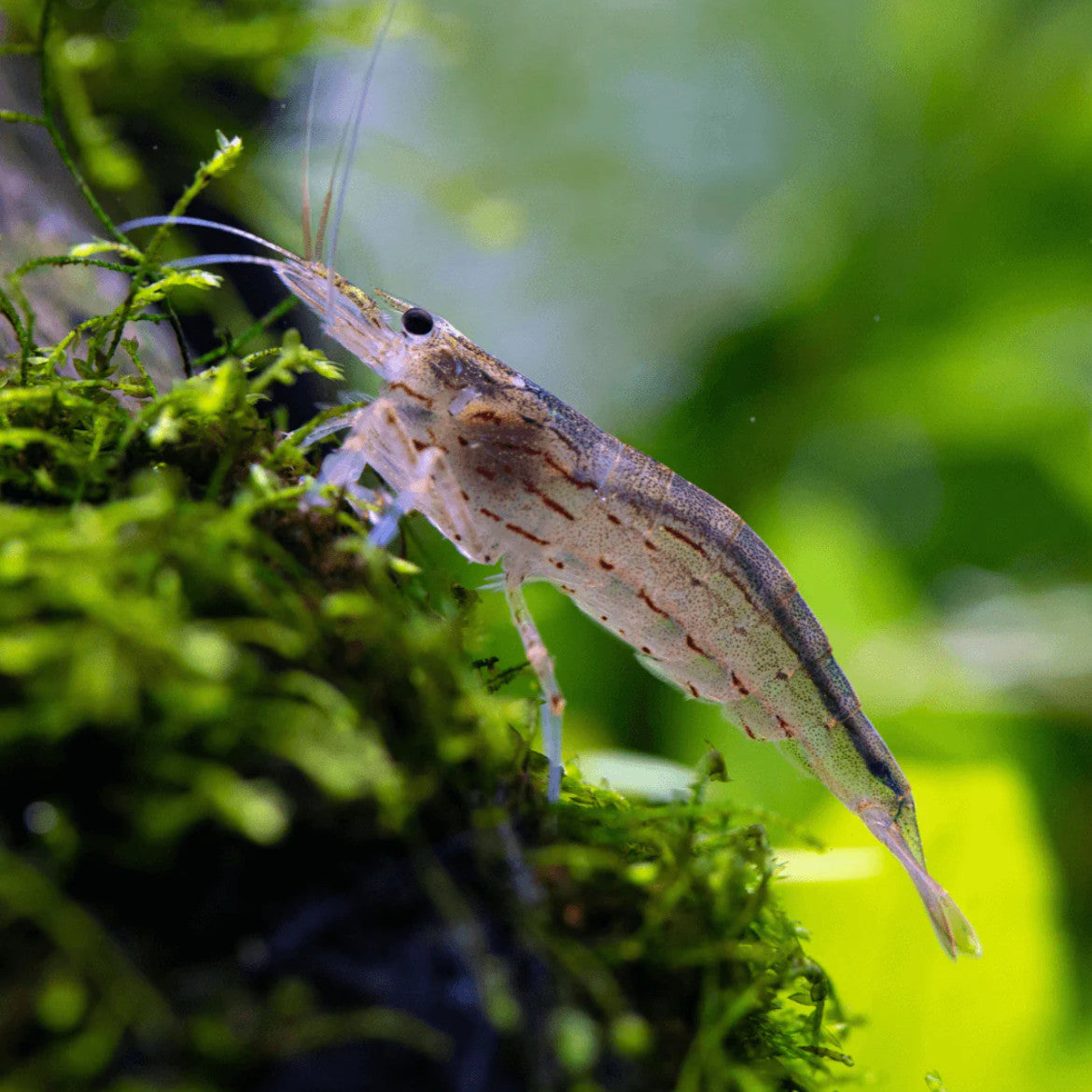
Can Amano Shrimp Live With Cherry Shrimp?
Yes. Their adult care requirements overlap enough that a stable Neocaridina-style aquarium can usually support both species.
Shrimp Up Aquatics currently keeps Fire Red Cherry Shrimp around pH 7.0–7.8, GH 7–8, KH 3–4, TDS 200–250, and 65–74°F. Amano Shrimp are tolerant freshwater shrimp and are commonly kept in moderate tap-water conditions.
The important point is not finding one “perfect” number. Keep the aquarium stable inside conditions suitable for both species. Our Red Cherry Shrimp water parameters guide explains GH, KH, pH, TDS, and temperature in more detail.
Will Amano Shrimp Eat Red Cherry Shrimp?
Amano Shrimp are not normally predators of healthy Red Cherry Shrimp. The two species can graze side by side without one treating the other as routine prey.
What you may notice is food competition. Amanos are larger and often extremely bold at feeding time. A large Amano may grab a wafer or pellet and carry it away while smaller Cherry Shrimp are still approaching.
The fix is simple: scatter food across several locations instead of placing one large pellet in one spot.

Do Amano Shrimp Eat Baby Cherry Shrimp?
Healthy Amanos are primarily grazers and scavengers, not active shrimplet hunters. The bigger concern in a mixed shrimp tank is competition for food, especially if many large Amanos are present with newly hatched Cherry Shrimp.
Baby Cherries depend heavily on biofilm and very fine food distributed throughout the aquarium. Dense moss, sponge filters, wood, and plant surfaces create places where shrimplets can graze without competing directly at one feeding dish.
Our baby Red Cherry Shrimp feeding guide explains how to keep food available to tiny shrimplets.
Can Amano Shrimp and Red Cherry Shrimp Breed Together?
No. Amano Shrimp are Caridina multidentata, while Red Cherry Shrimp are a Neocaridina color line. They do not produce hybrid offspring together.
This is very different from mixing Red Cherry Shrimp with Blue Dream, Yellow Golden Back, Green Jade, or other Neocaridina colors. Those color lines can interbreed with each other.
If preserving Fire Red genetics matters to you, our Red Cherry Shrimp interbreeding guide explains which color combinations can mix genetically.
Why Don't Amano Shrimp Multiply in a Cherry Shrimp Tank?
Female Amanos can carry eggs in freshwater, but their offspring have a completely different early life history from Cherry Shrimp.
Peer-reviewed research on Caridina multidentata larvae found successful development under elevated salinity, with larvae tolerating roughly 17–34 ppt in experimental conditions. That means a normal freshwater Cherry Shrimp tank is not a complete Amano breeding environment.
Red Cherry Shrimp are much simpler. Females carry relatively large eggs and release miniature freshwater shrimplets that can immediately begin grazing in the aquarium.
Which Shrimp Is Better for Algae: Amano or Cherry?
If algae control is the main objective, Amano Shrimp usually have the advantage because they are larger, strong grazers and consume more material per individual.
Cherry Shrimp still spend much of the day grazing biofilm and soft algae, but most people choose them primarily for color, breeding behavior, and colony growth rather than maximum cleaning power.
Both species still require supplemental nutrition. Algae is not a complete long-term diet. Our Red Cherry Shrimp feeding guide covers biofilm, algae, prepared foods, vegetables, and overfeeding.
How Many Amano and Cherry Shrimp Can You Keep Together?
There is no universal ratio. Base stocking on tank size, filtration, available grazing surface, and food.
For a small mixed tank, avoid packing the aquarium with so many large Amanos that every feeding becomes a competition. In larger planted tanks, the two species generally spread across the available surfaces and coexist easily.
Amano Shrimp vs. Red Cherry Shrimp FAQ
Can Amano Shrimp live with Red Cherry Shrimp?
Yes. They are generally peaceful, tolerate overlapping freshwater conditions, and do not interbreed.
Do Amano Shrimp kill Cherry Shrimp?
Healthy Amanos are not normally predators of healthy Cherry Shrimp. They may aggressively claim food because they are larger and bolder.
Can Amano Shrimp breed with Cherry Shrimp?
No. Amanos are Caridina multidentata; Red Cherries are Neocaridina. They do not hybridize.
Why do Cherry Shrimp breed but Amano Shrimp don't?
Cherry Shrimp complete reproduction entirely in freshwater. Amano larvae require elevated salinity during early development before returning to freshwater as juveniles.
Which is better: Amano Shrimp or Cherry Shrimp?
Choose Amanos for stronger algae grazing. Choose Red Cherries for bright color and an easily reproducing freshwater colony. Keep both if you want both benefits.

Sources & References
Crustacean Research — Larval performance of three amphidromous shrimp species in the genus Caridina under different temperature and salinity conditions — Peer-reviewed research showing that Caridina multidentata larvae develop successfully across elevated salinity conditions rather than normal freshwater alone.
Aqueon — Freshwater Shrimp Care Guide — General freshwater shrimp husbandry guidance covering Amano and Red Cherry Shrimp compatibility, water requirements, filtration, feeding, and breeding differences.