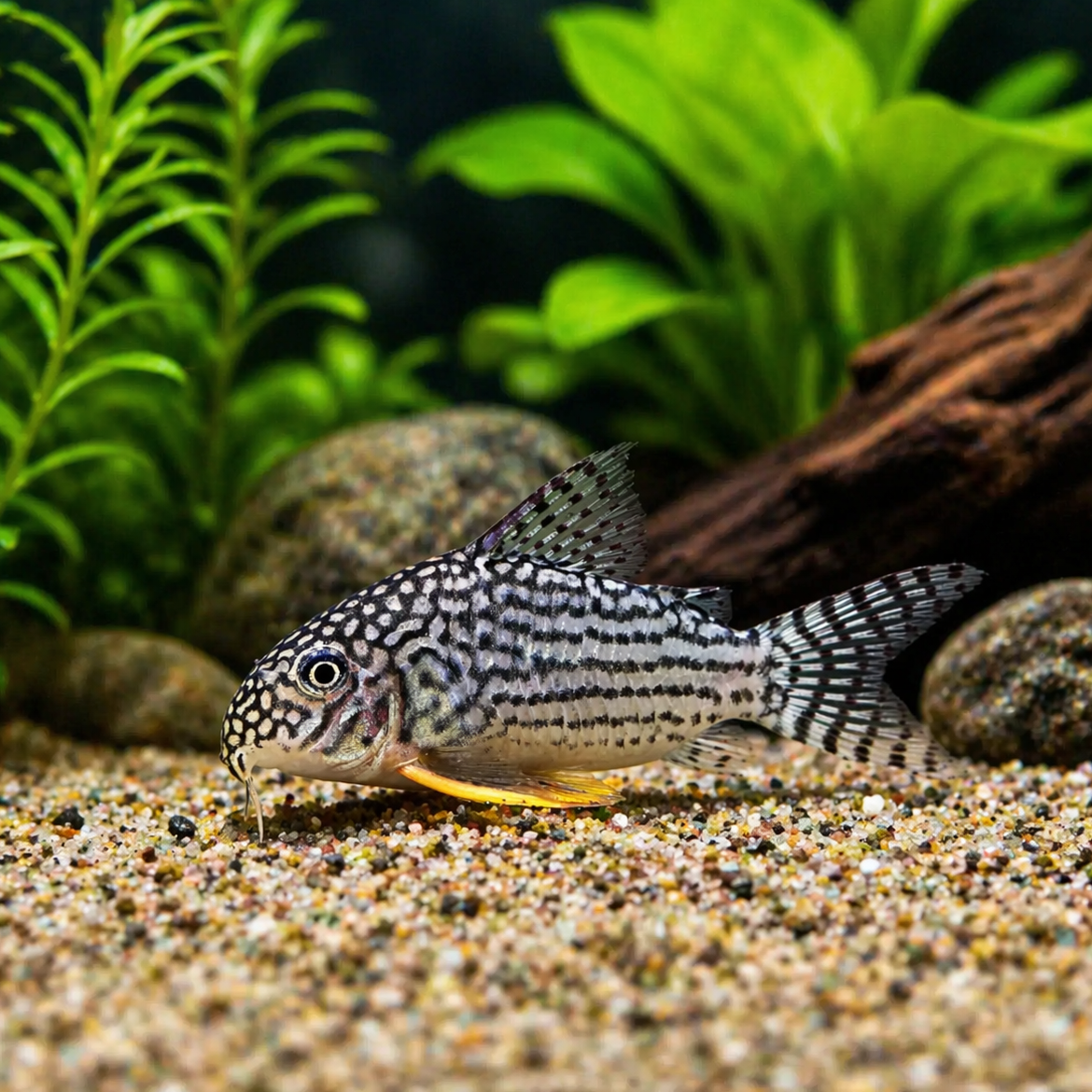
🐟 Sterbai Cory Catfish (Corydoras sterbai) – Hardy, Eye-Catching Bottom Dwellers for Community Tanks
Looking to add activity, personality, and bold patterning to the bottom of your aquarium? Meet the Sterbai Cory—a standout Corydoras species known for its striking white spots, dark body, and vibrant orange fins. These peaceful bottom dwellers are both functional and beautiful, constantly exploring and bringing life to your substrate.
⭐ Key Features
1. Unique Spotted Pattern & Orange Fins
Sterbai Corys feature a dark body covered in bright white spots, paired with vivid orange pectoral fins—one of the most distinctive looks among Corydoras.
2. Peaceful Community Fish
Extremely gentle and non-aggressive, they pair perfectly with shrimp, tetras, rasboras, and other peaceful species.
3. Social & Schooling Behavior
Best kept in groups of 5–6 or more, they thrive in numbers and display natural, interactive group behavior.
4. Active Bottom Cleaners
Constantly foraging along the substrate, they help pick up leftover food and keep your tank tidy.
5. Hardy & Adaptable
More tolerant of warmer temperatures than many Corydoras, making them a great choice for tropical community setups.
6. Perfect for Planted & Shrimp Tanks
Their calm temperament and bottom-dwelling habits make them ideal companions for Neocaridina and Caridina shrimp.
🐟 Why Choose Sterbai Cory Catfish?
- Bold spotted pattern with vibrant orange fins
- Peaceful and shrimp-safe
- Excellent bottom-level activity
- Hardy and beginner-friendly
- Perfect for planted community aquariums
Add movement, contrast, and personality to your tank—Sterbai Corys are a favorite among hobbyists for a reason.
🌿 Recommended Tank Parameters
-
Temperature: 74°–82°F (23°–28°C)
-
pH: 6.0–7.5
-
KH: 2–12 dKH
-
Minimum Tank Size: 15–20 gallons (larger groups prefer more space)
Care Tips:
Provide soft sand or smooth substrate to protect their sensitive barbels. Keep water clean and well-oxygenated, and always house them in groups for best health, activity, and natural behavior.