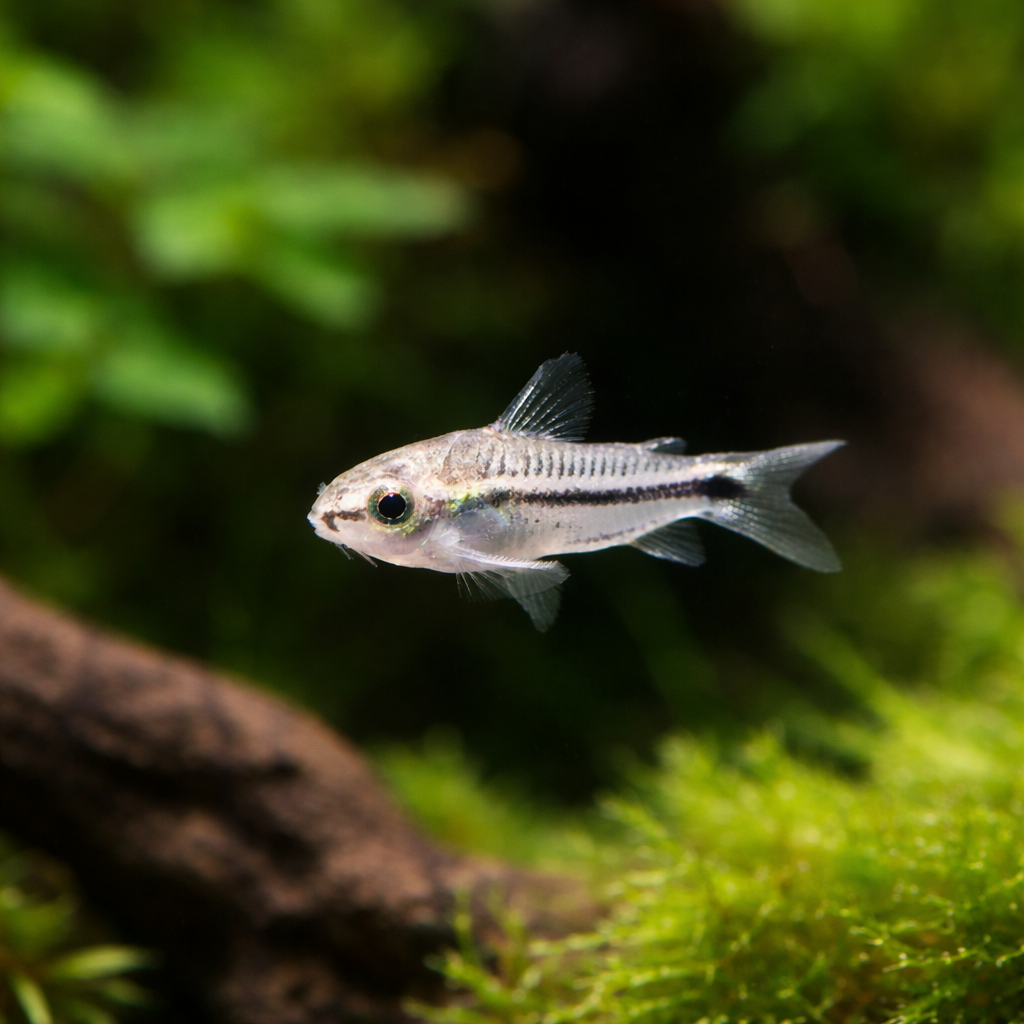


Happy, healthy, juvenile pygmy cory. They arrived quickly and were well packed accordingly to the weather. Their water was clean and smelled fresh. They are a wonderful welcome addition to my growing pygmy army.
Shrimp Up Aquatics!
Couldn't load pickup availability
Looking for an active, peaceful, and irresistibly cute addition to your freshwater aquarium? Meet the Pygmy Cory Catfish—a beloved nano species adored for its schooling behavior and nonstop energy. Unlike larger corydoras, the pygmy cory spends much of its time mid-water as well as along the substrate, creating lively motion throughout your tank.
1. True Nano Catfish Species
Pygmy Cory Catfish stay small, usually around ¾–1 inch, making them perfect for nano and planted aquariums.
2. Peaceful Community Fish
Gentle and shy, they make outstanding tankmates for shrimp, small tetras, rasboras, and other peaceful species.
3. Active Schooling Behavior
Keep them in groups of 6 or more and watch them shoal together through plants and open water—a beautiful, shimmering effect you’ll love to see.
4. Great Cleanup Crew Helpers
While not algae eaters, they eagerly pick up leftover food on the bottom, helping prevent waste buildup and contributing to a cleaner aquarium.
5. Beginner-Friendly
Hardy, adaptable, and undemanding—with stable water and clean conditions, pygmy corys thrive and quickly become a favorite fish in any tank.
6. Perfect for Planted & Shrimp Tanks
Their tiny size and gentle nature make them ideal companions for Neocaridina and Caridina shrimp.
Peaceful and community-safe
Unique mid-water swimming compared to other corydoras
Ideal for nano aquariums
Excellent for beginners and experienced aquarists alike
Full of personality in a tiny package
Add movement, personality, and charm to your aquarium—order your Pygmy Cory Catfish today! These little gems bring endless activity and are always in high demand.
Temperature: 72°–82°F (22°–28°C)
pH: 5.8–7.8
KH: 0–15 dKH
Minimum Tank Size: 10–20 gallons (larger schools thrive in larger tanks)
For best results, keep in groups of 6+ and provide soft sand or smooth substrate to protect their sensitive barbels.
Overall rating: 5.0 / 5 from 15 reviews.
Happy, healthy, juvenile pygmy cory. They arrived quickly and were well packed accordingly to the weather. Their water was clean and smelled fresh. They are a wonderful welcome addition to my growing pygmy army.

Absolutely adorable little fish! They are peaceful, active, and so fun to watch. They were very pale for the first few days, but their color gradually came back. I had some losses with my first shipment, but the seller sent replacements.

My pigmy Cory catfish arrived healthy and active! They're so small, I thought they were the shrimp they arrived with!

Arrived safe and healthy:)

They arrived safely and insulated so they were cool while it was hot out.
Amazing active fish
My pygmys arrived today, they are all healthy and very lively! Thank you!
Super cute addition to the tank.
The corys arived alive and well and are doing good in their new home.
They arrived alive with one extra (thanks)!
Arrived alive, doing well. So cute!!
Amazing customer service and my fish arrived happy and healthy!
Arrived healthy, a fun little addition to our tank. Thanks!
Ordered 6 Pygmy CoryDoras, they came packaged well, very pleased.
They arrived alive and are doing well in their new home.