ShrimpUpAquatics
Horned Nerite Snails (Clithon spp.) – Freshwater Algae-Eating Snails
Horned Nerite Snails (Clithon spp.) – Freshwater Algae-Eating Snails
Couldn't load pickup availability
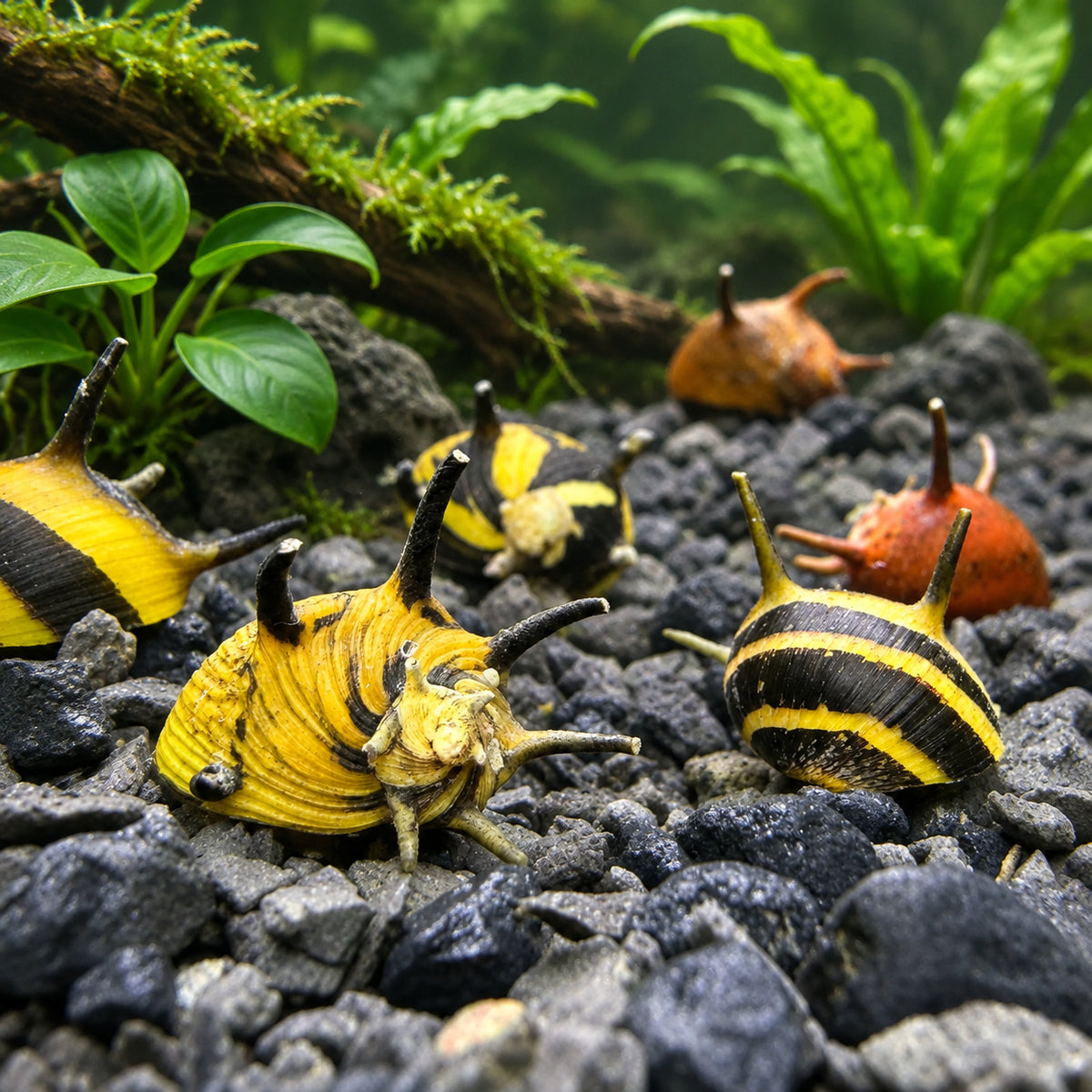
Horned Nerite Snails are peaceful, hard-working freshwater algae grazers recognized by their small, beautifully patterned shells and distinctive horn-like projections. These tiny snails add character to planted aquariums while browsing natural algae and biofilm on glass, rocks, wood, and other aquarium surfaces.
Each snail is unique. Shell color, horn number, spine length, pattern, and size vary naturally; occasional worn or broken horn tips are normal. Photos illustrate the general type, not an exact individual.
Why Choose Horned Nerite Snails?
Small spines give each snail a remarkable natural look. Shell tones may include yellow, olive, brown, black, or striped patterns.
They steadily graze soft algae films and biofilm from hard aquarium surfaces, supporting your regular maintenance routine.
Suitable for many Neocaridina and Caridina shrimp tanks and calm freshwater communities with stable, mineral-rich water.
Horned nerites may lay egg capsules, but their larvae do not establish breeding populations in a conventional freshwater aquarium.
What Are Horned Nerite Snails?
Horned or thorn nerites are small neritid snails commonly sold under Clithon species names, including Clithon corona. Species and shell forms in the aquarium trade vary. Their hard shells may have visible little horns, which are part of the shell and do not sting fish, shrimp, or people.
Compared with many larger nerites, horned nerites have a compact size that makes them attractive additions to established nano aquariums. However, their small size does not mean they can live on clean glass alone: they need stable water chemistry and enough algae or suitable supplemental food.
Horned Nerite Snail Care & Water Parameters
| Scientific name | Clithon spp. (often sold as Clithon corona) |
|---|---|
| Common names | Horned Nerite Snail, Thorn Nerite Snail, Horn Nerite |
| Care level | Easy to moderate in a mature aquarium |
| Adult shell size | Typically about 0.4–0.8 inch; varies by type |
| Temperature | 72–80°F (22–27°C) |
| pH | Approximately 7.0–8.5; avoid acidic, shell-eroding conditions |
| GH | About 6–15 dGH; sufficient calcium and minerals are important |
| KH | Approximately 3–10 dKH |
| Ammonia / nitrite | 0 ppm |
| Temperament | Peaceful algae and biofilm grazer |
| Diet | Natural algae, biofilm, and suitable supplementary snail foods |
| Tank size | 5 gallons or larger for a small number, provided sufficient food is available; larger packs need more established grazing area |
Stable, mature tanks are best. Acclimate your snails gradually, use fully dechlorinated water, and maintain adequate carbonate hardness and calcium for healthy shells. Avoid sudden pH, temperature, or hardness changes.
Will Horned Nerite Snails Eat Aquarium Algae?
Horned Nerite Snails are useful helpers for grazing natural algae and biofilm. They commonly browse the soft film that develops on aquarium glass, rock, driftwood, and decorations. They are not a complete replacement for tank maintenance and should not be relied upon to eliminate every type of algae, such as long hair algae.
A mature aquarium with a sustainable biofilm supply is ideal. In tanks with little natural growth, offer suitable algae-based wafers or other snail-safe supplemental foods and monitor whether the snails actually eat them. A new, spotless tank can leave these grazers without adequate nutrition.
Horned Nerite Snails in Planted & Shrimp Aquariums
These peaceful snails generally coexist well with freshwater shrimp and compatible community fish. They browse surfaces without intentionally damaging healthy aquarium plants. They are well suited to planted aquascapes with plenty of rock, wood, and glass to graze.
Avoid aggressive fish and known snail predators, including some puffers and loaches. Use a secure lid or cover aquarium gaps: nerites can climb above the waterline and potentially escape.
Pair them with live aquarium plants to create a natural habitat, or explore more freshwater aquarium snails at Shrimp Up Aquatics.
Horned Nerite Eggs & Freshwater Breeding
Female horned nerites may attach small white egg capsules to rocks, glass, wood, or other hard surfaces. The capsules can remain visible, but the larvae do not complete their life cycle under normal freshwater aquarium conditions. You will not typically get a multiplying snail colony in a freshwater tank.
Acclimation, Shipping & Important Safety Notes
- Acclimate slowly: Help your snails adjust to differences in temperature and water chemistry. Avoid abrupt changes in pH or hardness.
- Place upright: Gently set each snail against aquarium glass, rock, or substrate after acclimation. Some may remain inactive temporarily after transit.
- Keep water safe: Do not use copper-based medications or other invertebrate-toxic treatments in their aquarium.
- Provide food and minerals: Offer established biofilm, supplemental foods if needed, and sufficient calcium for shell health.
- Expect natural variation: Horns can differ in number and size and may wear or break without indicating a problem.
Frequently Asked Questions About Horned Nerite Snails
Do Horned Nerite Snails have real horns?
Yes. Their shells can feature small, hard, horn-like projections. The spines are not venomous, and their number and shape vary naturally.
Are Horned Nerite Snails safe with freshwater shrimp?
Yes, they are peaceful grazers that are commonly kept with Neocaridina and Caridina shrimp. Make sure the water parameters suit both animals.
Will Horned Nerite Snails reproduce in freshwater?
Female snails may lay visible egg capsules, but the larvae require different salinity conditions to develop. They do not normally establish a breeding population in freshwater tanks.
How big do Horned Nerite Snails get?
They are among the smaller nerites, often about 0.4–0.8 inch in shell size depending on the specific Clithon type.
What should I feed them if my tank has no algae?
Offer suitable snail-safe algae-based foods and maintain an established biofilm supply. They can starve in overly clean or recently set-up aquariums, even if the water looks pristine.
Do Horned Nerite Snails eat live plants?
They primarily graze algae and biofilm and are not known for eating healthy aquarium plants under normal conditions.
Can their horns break?
Yes. Horn number, length, and condition vary, and tips can wear or break. A shortened horn does not automatically mean the snail is unhealthy.
How many Horned Nerite Snails should I buy?
Choose a pack based on your tank size and available algae/biofilm. Multiple snails need enough established surface area and food; a larger pack is best spread across multiple suitable aquariums when necessary.