ShrimpUpAquatics
Green Zebra Danio (Danio rerio) – Vibrant Freshwater Schooling Fish
Green Zebra Danio (Danio rerio) – Vibrant Freshwater Schooling Fish
Couldn't load pickup availability
Green Zebra Danio Fish for Sale
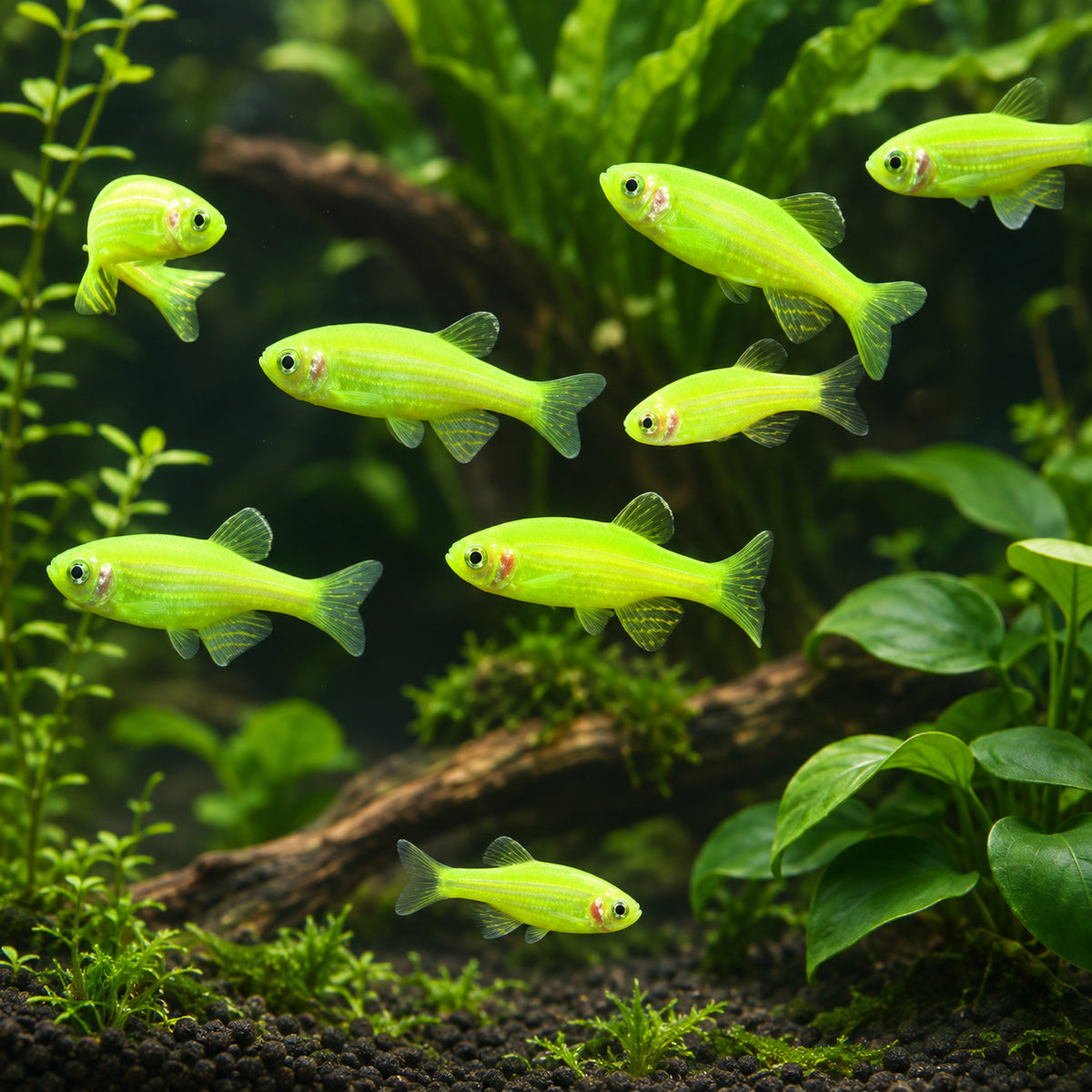
Eye-catching green color and nonstop schooling action for your freshwater aquarium. The Green Zebra Danio (Danio rerio) is a bright, active variation of the popular Zebra Danio. These sleek freshwater fish swim confidently through the middle and upper areas of the tank, adding movement and color to planted community aquariums.
Zebra Danios are known for their lively temperament, adaptable nature, and distinctive horizontal body lines. Green-colored danios may vary in hue and apparent brightness depending on individual fish and aquarium lighting. They are best kept as a group in a mature aquarium that provides ample swimming room.
Why Choose Green Zebra Danios?
Whether you're building a lively community tank or adding contrast to a natural aquascape, Green Zebra Danios provide an active display. Their streamlined shape and quick swimming create a dynamic effect among stem plants, Anubias, and driftwood.
- Vibrant green appearance: A distinctive color choice for a freshwater community display.
- Entertaining group behavior: They explore the water column and often move together when kept in a proper school.
- Beginner-friendly husbandry: Hardy when provided with stable water, adequate filtration, and a cycled aquarium.
- Planted-tank friendly: Enjoy open swimming lanes bordered by live plants and natural cover.
- Community potential: Suitable with compatible, peaceful fish that appreciate similarly active tank mates.
Green Zebra Danio Care Guide & Water Parameters
Green Zebra Danios share the general husbandry needs of other Danio rerio color forms. Their small body size does not mean they belong in a tiny bowl: these fish are strong, fast swimmers that benefit from horizontal tank length.
| Scientific name | Danio rerio |
|---|---|
| Common name | Green Zebra Danio, Green Zebra Fish, Green Danio |
| Care level | Beginner-friendly with proper aquarium setup |
| Adult size | 1.5–2 inches (4–5 cm) |
| Temperature | 68–78°F (20–26°C) |
| pH | Approximately 6.0–8.0; stability matters more than a perfect number |
| Hardness | Approximately 5–19 dGH |
| Ammonia / nitrite | 0 ppm / 0 ppm |
| Recommended aquarium | 20-gallon long or larger with a tight-fitting lid |
| Minimum group | 6 or more Zebra Danios |
| Swimming level | Middle to upper water column |
| Diet | Omnivore: quality flakes or micro pellets, with frozen/live food variety |
| Temperament | Generally peaceful, very fast and active |
Keep temperature and chemistry consistent, use biological filtration, maintain good oxygen levels, and test water regularly. Never add new fish to an aquarium that has not completed its nitrogen cycle.
How to Set Up a Tank for Green Zebra Danios
Keep a Proper School
For natural behavior and lower stress, keep a group of six or more. A larger group is often more attractive in a spacious aquarium. The 3-pack is useful for supplementing an established school, but three fish alone is not an appropriate long-term group.
Give Them Room to Swim
Choose a 20-gallon long aquarium or larger, with generous open water for fast swimming. Danios can jump when startled, so a fitted lid is important. Avoid 1-gallon kits and other very small tanks.
Add Plants and Natural Cover
Line the rear and sides with live aquarium plants while leaving a clear swim path. Java fern, Anubias, and taller stem plants provide visual contrast and shelter without blocking movement. A dark substrate often makes their color more noticeable.
What Do Green Zebra Danios Eat?
Green Zebra Danios are omnivores. Offer high-quality tropical fish flakes, small pellets, or appropriately sized micro foods as a staple. For variety, feed occasional frozen or live brine shrimp, daphnia, and similarly sized foods. Feed only what the fish can finish promptly to help maintain excellent water quality.
Tank Mates and Compatibility
Choose peaceful community fish that are comfortable with the danios' brisk swimming style and water conditions. Avoid delicate, slow-moving long-finned species that may be stressed or nipped by an overly boisterous school. Use appropriate tank size and stocking levels for all inhabitants.
With shrimp: A heavily planted aquarium may provide shelter for adult ornamental shrimp, but danios can hunt baby shrimp and other tiny invertebrates. They are not dependable companions for a shrimp-breeding colony.
Breeding Green Zebra Danios
Zebra Danios are egg scatterers. Well-conditioned adults may spawn in home aquariums, but they often eat their own eggs and fry. Breeding generally requires a separate spawning setup that protects the eggs, plus appropriate food for newly hatched fry.
Shop Green Zebra Danios at Shrimp Up Aquatics
Add bright color and active group behavior to your freshwater aquarium. Select a 3-, 6-, 12-, or 18-fish pack based on the size of your existing school and aquarium.
Live fish shipments may be held until stock and weather conditions are safe. UPS Next Day Air is required for live fish warranty coverage. Please review our Live Arrival Guarantee before ordering.
Green Zebra Danio FAQs
How many Green Zebra Danios should I keep?
At least six Zebra Danios should be kept together. The 3-pack is best used to add to an established group.
Do Green Zebra Danios need a large tank?
We recommend a 20-gallon long or larger because these small fish are especially active and need horizontal swimming space.
Are Green Zebra Danios easy to care for?
They are generally hardy, provided you have a cycled, adequately sized aquarium, suitable companions, stable water conditions, and a proper school.
Will Green Zebra Danios eat baby shrimp?
Yes, they may prey on shrimplets. Keep breeding shrimp in a dedicated aquarium if you want strong survival rates.
What temperature do Green Zebra Danios prefer?
About 68–78°F (20–26°C) is a practical range. Keep the temperature stable and avoid sudden changes.
What should I feed Green Zebra Danios?
Offer quality small flakes or pellets and supplement with occasional appropriately sized frozen or live foods.