Carbon Rili Shrimp for Sale – Black & Clear Neocaridina
Looking to buy Carbon Rili Shrimp online? Carbon Rili Shrimp are patterned freshwater Neocaridina known for dark black to charcoal coloration broken up by translucent or clear body sections.
Their high-contrast pattern gives them a striking appearance that differs from solid dark Neocaridina lines, while keeping the approachable care, peaceful behavior, and freshwater breeding habits Neocaridina are known for.
Shipping SizeApproximately 1/2 to 1 inch and sold at breeding age.
Signature PatternBlack or charcoal pigmentation separated by clear or translucent areas.
Care LevelBeginner-friendly in a mature, stable freshwater aquarium.
Available Packs1, 5, 10, 20 shrimp, plus a 10-shrimp Breeder Pack.
Which Carbon Rili Shrimp pack should you choose?
-
1 shrimp: Best for adding an individual to an established Carbon Rili colony.
-
5 shrimp: A smaller group for expanding an existing colony.
-
10 shrimp: A practical starting group for a mature shrimp aquarium.
-
20 shrimp: A larger starting population for stronger visual impact and colony growth.
-
Breeder Pack: 10 breeding-age shrimp with approximately 7 females and 3 males.
Choose your preferred quantity using the product options above this description.
Why Choose Carbon Rili Neocaridina Shrimp?
-
High-Contrast Black-and-Clear Pattern that stands apart from solid-color Neocaridina morphs.
-
Beginner-Friendly Care when kept in a fully cycled aquarium with stable water chemistry.
-
Peaceful Temperament suited to dedicated shrimp tanks and carefully selected community aquariums.
-
Freshwater Breeding with no brackish larval stage required.
-
Active Grazing Behavior on biofilm, microorganisms, soft algae films, and natural aquarium surfaces.
-
Breeder Pack Available for hobbyists who want a female-heavy colony starter.
Compare additional colors in our Neocaridina shrimp collection.
What Do Carbon Rili Shrimp Look Like?
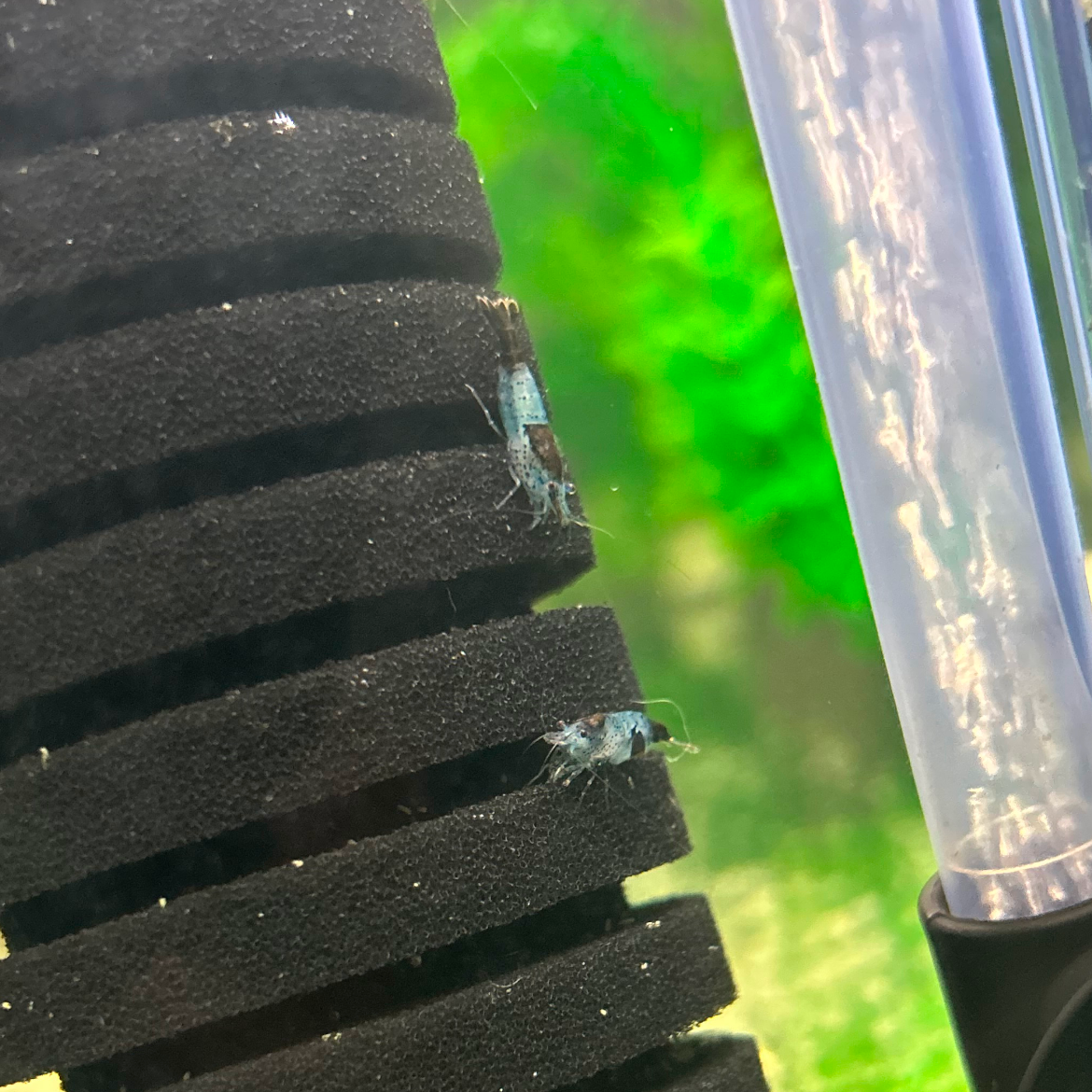
Carbon Rili Shrimp are selected for a broken dark pattern rather than continuous solid coloration. A typical Carbon Rili shows black, charcoal, or very dark blue-black sections around the head, tail, or both, with translucent or clear areas through the middle of the body.
Pattern placement and color intensity naturally vary from shrimp to shrimp. Genetics, age, sex, lighting, substrate, and aquarium background can all influence how dark the markings appear.
Carbon Rili Shrimp Water Parameters
Carbon Rili Shrimp are Neocaridina and generally perform best when water chemistry remains stable rather than being constantly adjusted.
| Parameter |
Recommended Neocaridina Range |
| pH |
7.0–7.8 |
| GH |
7–8 |
| KH |
3–4 |
| TDS |
200–250 ppm |
| Temperature |
65–74°F |
| Ammonia |
0 ppm |
| Nitrite |
0 ppm |
Avoid sudden changes in temperature, pH, hardness, or TDS. A fully cycled aquarium with mature biological filtration and consistent maintenance matters more than chasing one exact number.
For more detail, read our Neocaridina Shrimp Water Parameters Guide.
Best Tank Setup for Carbon Rili Shrimp
Mature, Cycled Aquarium
Carbon Rili Shrimp should be introduced to a fully cycled aquarium with stable water quality. Mature tanks also provide more biofilm and microorganisms for constant grazing.
Plants, Moss & Hardscape
Plants, moss, wood, leaves, and aquarium-safe rock increase natural grazing surface and provide cover during molts. Dense moss is especially useful for newborn shrimplets. Browse our live aquarium plants for shrimp-friendly setups.
Gentle Filtration
Sponge filters are ideal for many shrimp tanks because they provide gentle water movement, biological filtration, and extra grazing surface without exposing baby shrimp to an unprotected intake.
What Do Carbon Rili Shrimp Eat?
Carbon Rili Shrimp spend much of the day grazing biofilm, microorganisms, soft algae films, decaying organic material, and small food particles. Supplemental feeding becomes especially useful in cleaner aquariums or larger colonies.
| Food Source |
Role in the Aquarium |
| Biofilm |
Important natural grazing source in mature tanks |
| Soft algae films |
Frequently grazed from hardscape, plants, and glass |
| Shrimp foods / wafers |
Useful supplemental nutrition for established colonies |
| Botanicals / leaves |
Add grazing surface and slowly decomposing organic material |
| Blanched vegetables |
Optional occasional supplemental food |
Feed conservatively and remove excess food before it begins to affect water quality. Browse our shrimp food and botanicals for supplemental feeding options.
Breeding Carbon Rili Shrimp
Carbon Rili Shrimp reproduce completely in freshwater. Mature females carry fertilized eggs beneath the abdomen until fully formed baby shrimp hatch directly into the aquarium.
A strong breeding setup includes stable water, mature filtration, textured grazing surfaces, dense plants or moss, consistent feeding, and very low predation pressure.
Breeder Pack: Our Carbon Rili Breeder Pack includes 10 breeding-age shrimp with approximately 7 females and 3 males, providing a female-heavy starting ratio for hobbyists focused on establishing a colony.
For general breeding fundamentals, read our Neocaridina Shrimp Breeding Guide.
Carbon Rili Shrimp vs. Chocolate Shrimp
| Trait |
Carbon Rili Shrimp |
Chocolate Shrimp |
| Typical appearance |
Dark black/charcoal sections separated by clear or translucent areas |
Primarily continuous brown to dark chocolate coloration |
| Species type |
Neocaridina |
Neocaridina |
| Care level |
Beginner-friendly |
Beginner-friendly |
| Freshwater breeding |
Yes |
Yes |
| Best choice for |
Patterned dark-and-clear appearance |
More solid dark coloration |
If you prefer a more solid dark morph, view our Chocolate Shrimp.
Can Carbon Rili Shrimp Live With Other Neocaridina?
Different Neocaridina color lines can generally live together peacefully, but they can interbreed. Mixing color lines may create less predictable offspring and can increase wild-type coloration over later generations.
If maintaining a consistent Carbon Rili pattern is important, keep the breeding colony separate from other Neocaridina color morphs.
Carbon Rili Shrimp Tank Mates
Carbon Rili Shrimp are peaceful. Snails and other non-aggressive invertebrates are commonly compatible, while some small peaceful fish can work in heavily planted tanks. However, nearly any fish may eat baby shrimp if shrimplets are small enough to fit in its mouth.
For maximum breeding success and shrimplet survival, a dedicated shrimp tank is the safest option.
Carbon Rili Shrimp Price & Pack Options
Use the live product options above for current pricing. Available Carbon Rili pack sizes include:
- 1 Shrimp
- 5 Shrimp
- 10 Shrimp
- 20 Shrimp
- Breeder Pack – 10 shrimp, approximately 7 females and 3 males
Acclimating Carbon Rili Shrimp After Delivery
Shipping water can differ from your aquarium in temperature, pH, GH, KH, and TDS. A gradual acclimation process helps reduce stress while the shrimp adjust to your aquarium.
Follow our Freshwater Shrimp Acclimation Guide before releasing new livestock.
Live Arrival & DOA Policy: Livestock orders are covered by our
Live Arrival Guarantee / DOA Policy. Review the policy before ordering for arrival, documentation, and claim requirements.
Ready to add Carbon Rili Shrimp to your aquarium?
Select your preferred 1, 5, 10, 20, or Breeder Pack above and start or expand your Carbon Rili Neocaridina colony.
Carbon Rili Shrimp FAQ
Are Carbon Rili Shrimp Neocaridina?
Yes. Carbon Rili Shrimp are a patterned Neocaridina color variety with dark pigmentation separated by translucent or clear areas.
What does “Rili” mean in Carbon Rili Shrimp?
Rili refers to a broken color pattern where strongly pigmented sections are interrupted by transparent or lightly pigmented body areas.
How big are Carbon Rili Shrimp when shipped?
Our Carbon Rili Shrimp are approximately 1/2 to 1 inch and are sold at breeding age.
Are Carbon Rili Shrimp good for beginners?
Yes. They are generally beginner-friendly when kept in a mature, fully cycled aquarium with stable water chemistry and appropriate mineral content.
What water parameters do Carbon Rili Shrimp need?
A suitable Neocaridina range is approximately pH 7.0–7.8, GH 7–8, KH 3–4, TDS 200–250 ppm, and 65–74°F. Stability matters more than chasing exact values.
Will Carbon Rili Shrimp breed in freshwater?
Yes. Their entire reproductive cycle occurs in freshwater, and mature females carry eggs until fully formed shrimplets hatch.
What comes in the Carbon Rili Breeder Pack?
The Breeder Pack includes 10 breeding-age Carbon Rili Shrimp with approximately 7 females and 3 males.
What is the difference between Carbon Rili and Chocolate Shrimp?
Carbon Rili Shrimp are selected for dark sections broken up by clear or translucent areas, while Chocolate Shrimp are selected for more continuous dark brown coloration.
Can Carbon Rili Shrimp live with other Neocaridina?
Yes, but they can interbreed with other Neocaridina color lines. Keep them separate if maintaining the Carbon Rili pattern is important.
Can Carbon Rili Shrimp live with fish?
They can live with some small peaceful fish, but fish may prey on newborn shrimplets. A dedicated shrimp tank gives the best breeding and survival rates.
Do Carbon Rili Shrimp eat algae?
They graze on soft algae films and biofilm, but they are not a complete algae-control solution. Proper lighting, nutrient management, filtration, and maintenance still matter.
Do Carbon Rili Shrimp need a heater?
Not always. If room temperature keeps the aquarium consistently within a suitable range, a heater may be unnecessary. Stable temperature matters more than adding heat to an already appropriate environment.
Do Carbon Rili Shrimp need a filter?
A mature biological filter is strongly recommended. Sponge filters are especially shrimp-friendly because they provide gentle filtration and extra grazing surface.
Buy Carbon Rili Shrimp Online
Carbon Rili Shrimp combine beginner-friendly Neocaridina care with a dramatic dark-and-clear pattern that stands apart from solid dark varieties. Choose the pack size that fits your aquarium and start or expand your colony today.
Want to compare more colors? Browse our full Neocaridina shrimp collection.