

Neocaridina shrimp are one of the best livestock choices for a nano aquarium. They stay small, come in dozens of bright color morphs, spend most of the day grazing across plants and hardscape, and can build a thriving colony without requiring the swimming space that most fish need.
That makes them especially appealing for 5- to 10-gallon planted tanks, desktop aquariums, and other compact freshwater setups.
But there is one important catch: small tanks are not automatically easier to maintain. A nano aquarium contains less water, so temperature, pH, dissolved minerals, and waste concentrations can change faster than they would in a larger tank. Neocaridina are well suited to nano aquariums because of their size and relatively adaptable care requirements—not because water quality matters less.
If you are planning a small shrimp tank, browse our complete Neocaridina shrimp collection to compare Fire Red Cherry, Blue Dream, Blue Velvet, Skittles, Rili, Yellow, Orange, Green, and other color varieties.
What Is a Nano Aquarium?
There is no single universal definition, but in the freshwater hobby the term nano aquarium generally refers to a compact tank—often around 10 gallons or less.
A 2- or 3-gallon aquarium can technically hold shrimp, but very small volumes change quickly and leave less margin for error. For most beginners, a 5- to 10-gallon tank is easier to stabilize while still delivering the compact footprint that makes nano aquariums attractive.
That size range also gives you enough room for:
- A proper sponge filter
- Live plants and moss
- Driftwood or rock
- Open feeding and viewing areas
- A growing Neocaridina colony
1. Neocaridina Stay Small
One of the biggest reasons Neocaridina fit nano aquariums so well is their adult size.
The University of Florida IFAS profile for Neocaridina davidi describes adult cherry shrimp as small freshwater crustaceans and notes that newly hatched young emerge as miniature versions of the adults.
Because Neocaridina remain small, a group can use the three-dimensional structure of a planted nano aquarium extremely efficiently. They move across moss, wood, rocks, filter sponges, plant leaves, and substrate rather than needing long open swimming lanes.
That makes a well-designed nano tank feel active without feeling overcrowded.

2. Nano Tanks Put Neocaridina Where You Can Actually See Them
Neocaridina are small enough to disappear visually in a very large aquarium, especially when the tank is heavily planted.
In a nano setup, the viewing distance is shorter and the entire colony is concentrated into a smaller aquascape. That makes it much easier to watch natural behaviors such as:
- Biofilm grazing
- Molting
- Mating behavior
- Berried females carrying eggs
- Newborn shrimplets exploring moss
- Shrimp gathering around food
That close-up visibility is one of the reasons a shrimp-only nano aquarium can feel more interesting than a larger community tank where the shrimp remain hidden most of the day.
3. Their Color Has More Impact in a Small Aquascape
A nano tank has less visual space, so each animal contributes more to the overall appearance.
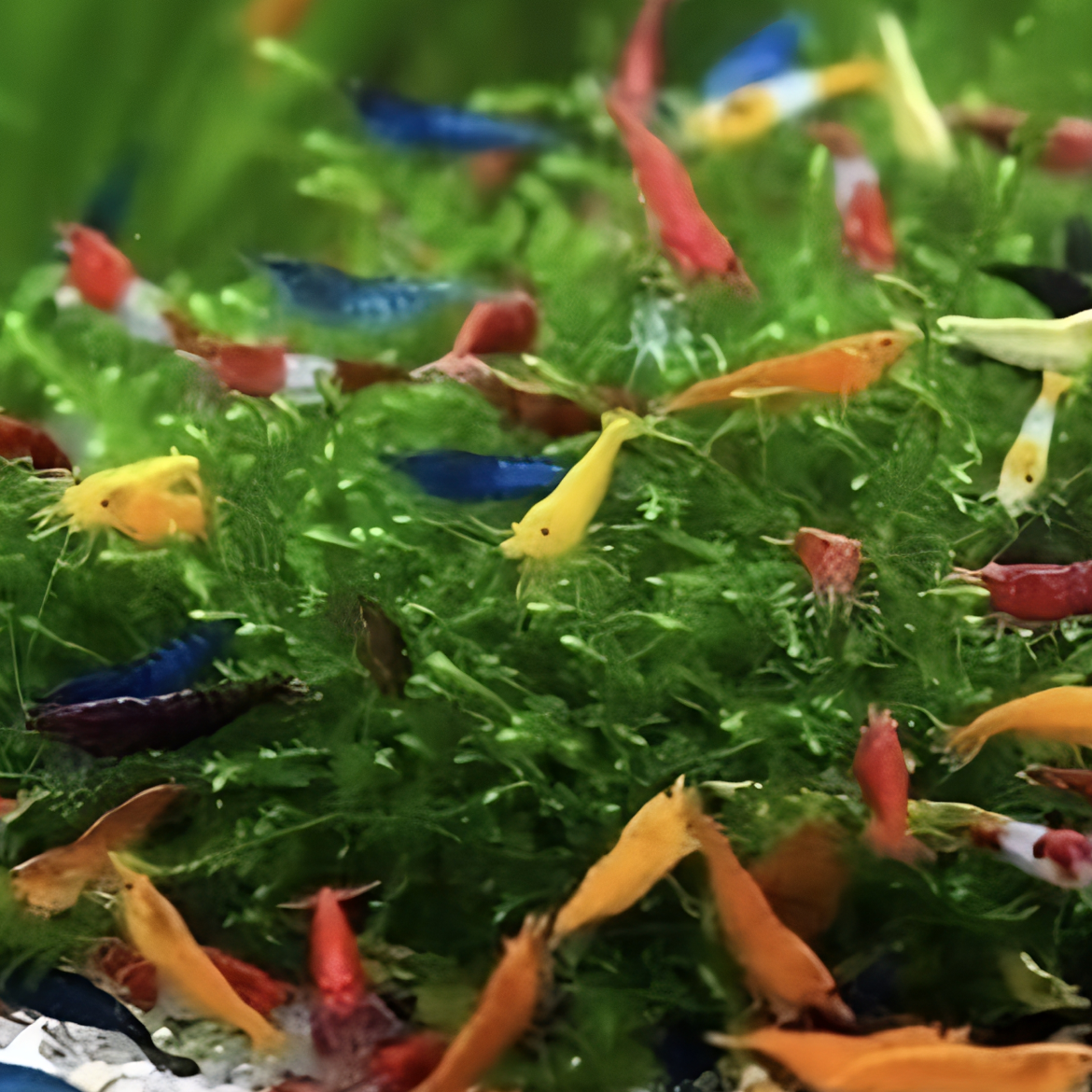
A small colony of bright red, blue, orange, yellow, or mixed Neocaridina can completely change the look of a planted aquarium.
For a classic high-contrast tank, Fire Red Cherry Shrimp stand out dramatically against green moss and dark substrate.
For a cooler color palette, Blue Dream Shrimp create deep blue contrast against bright plants and lighter hardscape.
If you want multiple colors in the same display, Skittles Shrimp can create a rainbow-style nano aquarium with red, blue, yellow, orange, and other Neocaridina colors.
Just remember that mixed Neocaridina color lines can breed together. Over multiple generations, offspring may become more variable, translucent, brown, or wild-type in appearance.
4. Neocaridina Are Active Grazers
A nano aquarium benefits from livestock that uses surfaces efficiently, and Neocaridina do exactly that.
UF/IFAS describes Neocaridina davidi as detritivores and opportunistic feeders that graze on algae, biofilms, and dead plant and animal material.
In a mature nano aquarium, you will often see shrimp picking across:
- Moss
- Plant leaves
- Driftwood
- Rock
- Substrate
- Filter sponges
- Botanicals
- Aquarium glass
That makes them constantly visible and useful members of the aquarium's food web.
They are not a replacement for filtration, water changes, or algae management, but they do help process fine organic material and continuously graze on biofilm and accessible soft algae.
Our guide on how Neocaridina shrimp improve aquarium ecosystems explains this role in more detail.
5. Their Individual Bioload Is Small
Because Neocaridina are tiny, an individual shrimp contributes far less waste than most aquarium fish.
That is useful in a nano aquarium where biological capacity and water volume are limited.
However, “low bioload” should never be confused with “no bioload.”
A colony can grow quickly, and a heavily fed shrimp tank can still accumulate waste. The aquarium still needs:
- A fully established biological filter
- Zero ammonia
- Zero nitrite
- Controlled feeding
- Appropriate water changes
The U.S. Environmental Protection Agency explains that ammonia can have direct toxic effects on aquatic organisms. That is especially important in nano tanks because a small amount of decomposing food can affect a small water volume faster.
6. Sponge Filters Are Almost Perfect for Nano Shrimp Tanks
A sponge filter is difficult to beat in a small Neocaridina aquarium.
It provides:
- Gentle biological filtration
- Oxygenation
- Low risk to baby shrimp
- A huge grazing surface
- Simple maintenance
- Low equipment footprint
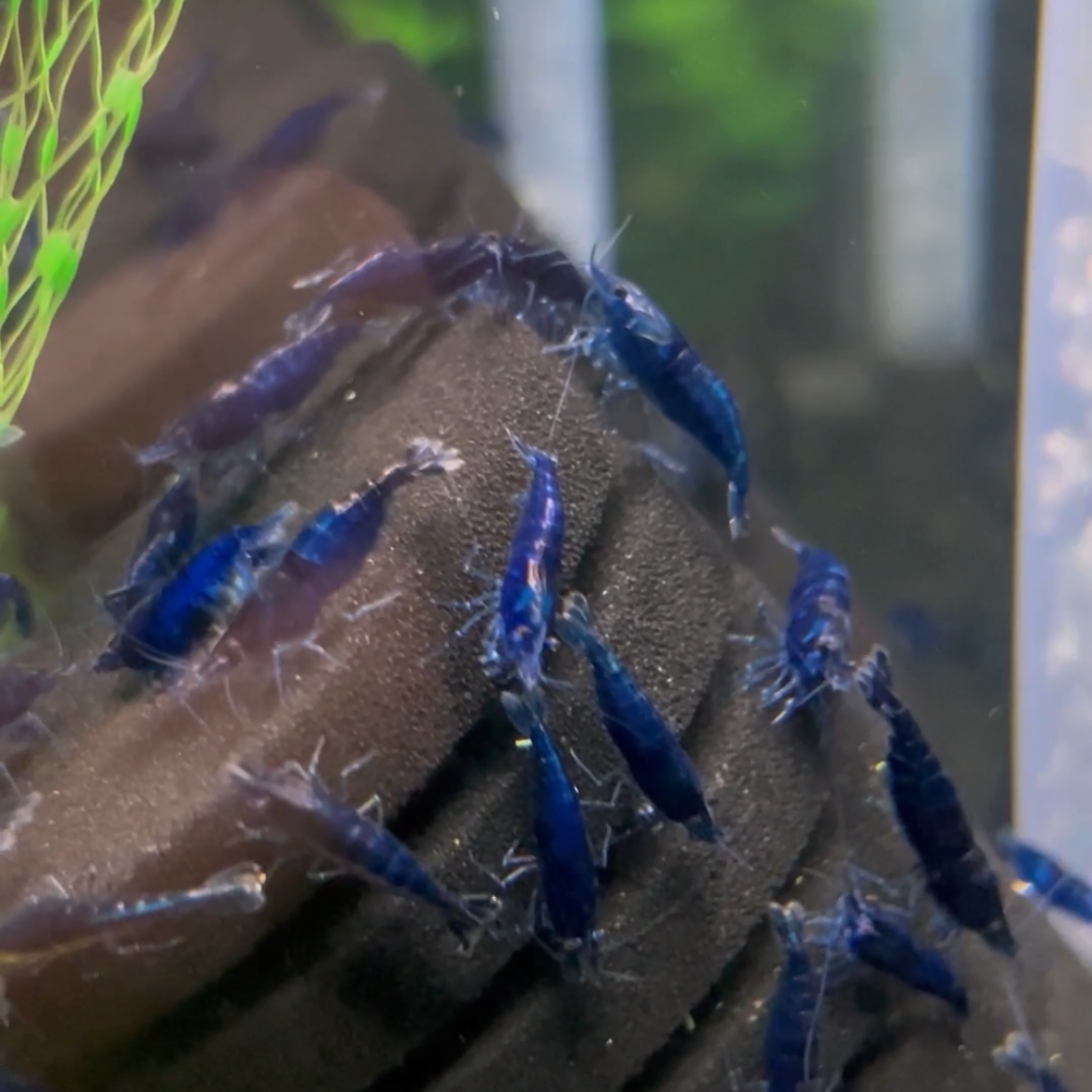
As the sponge matures, shrimp often spend large amounts of time grazing directly on it.
This is especially useful after the colony starts breeding because tiny shrimplets can feed on microscopic material growing across the sponge without being pulled into a conventional filter intake.
7. Neocaridina Thrive in Planted Nano Aquariums
Live plants are a major advantage in small shrimp tanks.
Plants create more grazing area without requiring more floor space. Moss, epiphytes, and stem plants effectively turn a small glass box into a much larger three-dimensional habitat.
Good options include:
- Java Moss
- Anubias
- Java Fern
- Cryptocoryne
- Bucephalandra
- Floating plants
- Compact carpeting plants
Moss is especially valuable because newborn shrimp can remain hidden within the branches while grazing.
Our Neocaridina Shrimp Tank Aquascaping Guide covers plants, substrate, hardscape, color contrast, filtration, and nursery zones in more detail.
8. Nano Aquariums Can Make Breeding Easier to Observe
Neocaridina reproduce completely in freshwater.
The female carries eggs beneath the abdomen until miniature shrimp hatch. UF/IFAS notes that Neocaridina davidi does not have a larval stage; the young emerge as tiny versions of the adults.
That makes them an excellent species for hobbyists who want to watch a colony grow in a compact aquarium.
A nano tank also makes it easier to notice:
- Female saddles
- Berried females
- Newborn shrimplets
- Population growth
- Changes in color quality
If breeding is the goal, keep fish out of the tank and provide dense moss, mature biofilm, and a shrimp-safe filter.
For the complete process, read our Neocaridina Shrimp Breeding Guide.
9. Neocaridina Are Beginner-Friendly—But Nano Tanks Require Discipline
Neocaridina are generally easier to keep than many ornamental Caridina varieties because they tolerate a broader range of suitable freshwater conditions.
Our Shrimp Up Aquatics Neocaridina systems are maintained around:
| Parameter | Our Neocaridina Systems |
|---|---|
| Temperature | 65–74°F |
| pH | 7.0–7.8 |
| GH | 7–8 dGH |
| KH | 3–4 dKH |
| TDS | 200–250 ppm |
| Ammonia | 0 ppm |
| Nitrite | 0 ppm |
Your tank does not need to match our exact numbers. The important part is maintaining appropriate conditions consistently.
For a full explanation of water chemistry, read our Neocaridina Shrimp Water Parameters Guide.
10. A 10-Gallon Nano Tank Is Often Easier Than a 2-Gallon Tank
One of the biggest mistakes beginners make is assuming the smallest possible aquarium is the easiest possible aquarium.
It usually is not.
A 2-gallon tank contains only one-fifth the water volume of a 10-gallon aquarium. That means evaporation, overfeeding, temperature changes, and maintenance mistakes can have a proportionally larger effect.
A 5- to 10-gallon tank still feels compact while providing far more stability.
For a first Neocaridina nano aquarium, 10 gallons is an excellent size if you have the space.
11. Evaporation Matters More in a Nano Aquarium
When water evaporates, minerals stay behind.
If you continually replace evaporated water with mineral-rich tap water, TDS and hardness can gradually increase.
That effect can become noticeable faster in a small aquarium.
Monitor the tank's water level and chemistry. When topping off evaporation, many shrimp keepers use low-mineral or RO water so they replace the lost water without continually adding more dissolved minerals.
Water changes and evaporation top-offs are not the same thing:
- Water change: removes water and dissolved material, then replaces it.
- Top-off: replaces only water that evaporated.
12. Overfeeding Is More Dangerous in a Small Tank
A large portion of nano-shrimp problems come from putting too much food into too little water.
Neocaridina already graze continuously on mature aquarium surfaces, so they do not need large piles of food sitting in the tank for hours.
Feed according to colony size.
If food is repeatedly left uneaten, reduce the amount.
A growing colony may eventually require more supplemental food, but that increase should follow the population—not precede it.
13. Nano Shrimp Tanks Are Easier to Aquascape on a Budget
A small aquarium requires less substrate, fewer plants, and smaller pieces of hardscape.
That means you can create a visually dense aquascape without buying the amount of material needed to fill a 40- or 75-gallon aquarium.
One piece of driftwood, a few rocks, and several small plants can be enough to create a complete landscape.
For shrimp, smaller-scale hardscape is also functional because every surface becomes potential biofilm habitat.
14. Shrimp-Only Nano Tanks Avoid Most Tank-Mate Problems
A dedicated shrimp nano tank is one of the simplest ways to maximize shrimplet survival.
Even small peaceful fish can eat newborn shrimp.
Removing fish from the equation means the tank can be designed entirely around:
- Shrimp-safe filtration
- Grazing surfaces
- Moss and cover
- Stable water chemistry
- Breeding
If you do add fish to a nano aquarium, research the adult size and behavior carefully. A tank that is appropriate for Neocaridina may be too small for many fish species.
15. Neocaridina Make a Nano Aquarium Feel Alive
Fish often occupy one level of the aquarium. Neocaridina use nearly every solid surface.
You may see shrimp:
- Walking upside down beneath leaves
- Climbing sponge filters
- Grazing vertically on aquarium glass
- Picking through moss
- Exploring wood and rock crevices
- Swimming briefly across open water
That continuous fine-scale movement is ideal for a tank designed to be viewed up close on a desk, shelf, countertop, or aquarium stand.

Best Nano Aquarium Setup for Neocaridina Shrimp
A simple, reliable setup might look like this:
| Component | Recommended Approach |
|---|---|
| Tank | 5–10 gallons or larger |
| Filter | Established sponge filter |
| Substrate | Shrimp-safe inert sand or gravel when appropriate for your water |
| Plants | Moss plus compact easy-growing plants |
| Hardscape | Driftwood or shrimp-safe rock with grazing surfaces |
| Ammonia | 0 ppm |
| Nitrite | 0 ppm |
| Maintenance | Consistent, controlled, and matched to tank chemistry |
How Many Neocaridina Shrimp Should You Put in a Nano Tank?
There is no single stocking number that fits every aquarium because filtration, tank maturity, feeding, plant mass, and maintenance all matter.
For a new 5- to 10-gallon shrimp aquarium, a starter group of around 10 shrimp is a practical place to begin.
That gives you enough animals to see throughout the tank and a reasonable chance of having both sexes without starting with an unnecessarily large population.
Remember that Neocaridina breed readily when conditions are favorable. The tank may contain far more shrimp a few months later than it did on day one.
Best Neocaridina Colors for Nano Aquariums
Fire Red Cherry Shrimp
Excellent against green plants and dark substrate. Their bright red color is easy to see even in dense moss.
Blue Dream Shrimp
Deep blue coloration creates a dramatic display against bright green plants and pale hardscape.
Blue Velvet Shrimp
Lighter blue coloration can be easier to see against dark backgrounds than very deep-blue strains.
Skittles Shrimp
A mixed-color option for aquarists who want a rainbow display rather than one pure breeding line.
Common Nano Shrimp Tank Mistakes
Starting Too Small
A tiny jar or 1-gallon cube leaves almost no margin for water-quality mistakes.
Adding Shrimp Before the Tank Is Cycled
Ammonia and nitrite should be zero before shrimp are introduced.
Overfeeding
Food decomposes quickly in a small water volume.
Using Too Much Equipment
A nano tank can become crowded with heaters, filters, large hardscape, and accessories. Keep the design simple.
Ignoring Evaporation
Small tanks can lose a meaningful percentage of their volume to evaporation.
Adding Fish That Need More Swimming Space
A nano aquarium that is perfect for shrimp may not be appropriate for the fish species you are considering.
Making Large Unmatched Water Changes
Small tanks respond quickly to temperature and chemistry differences. Prepare replacement water carefully.
Frequently Asked Questions About Neocaridina in Nano Aquariums
Can Neocaridina shrimp live in a 5-gallon tank?
Yes. A properly cycled and maintained 5-gallon aquarium can make an excellent Neocaridina tank. A 10-gallon aquarium generally provides even more stability for beginners.
Can Neocaridina live in a 2-gallon tank?
They can physically fit, but very small tanks are less forgiving because water chemistry and temperature can change quickly. Larger nano tanks are generally easier to maintain consistently.
Do Neocaridina need a heater in a nano aquarium?
Not always. If the room keeps the aquarium within a stable appropriate temperature range, a heater may not be necessary. A heater becomes useful when room temperature falls too low or fluctuates substantially.
Do Neocaridina need live plants?
No, but live plants provide valuable grazing surfaces, cover, and nursery habitat for baby shrimp.
Can I keep fish with Neocaridina in a nano tank?
Sometimes, but many nano aquariums are too small for common fish species, and even peaceful fish may eat shrimplets. A shrimp-only nano tank is the simplest option for colony growth.
Do Neocaridina clean nano aquariums?
They graze on biofilm, algae, detritus, and fine organic material, but they do not replace filtration or maintenance.
Are nano tanks good for breeding Neocaridina?
Yes, especially if the tank is shrimp-only, mature, heavily planted, and filtered with a shrimp-safe sponge filter.
What is the best nano tank size for a beginner?
A 5- to 10-gallon tank is a practical range, with 10 gallons offering more stability while still remaining compact.
Why Neocaridina and Nano Aquariums Work So Well Together
Neocaridina shrimp match the strengths of a nano aquarium unusually well.
They remain small. They use every surface rather than requiring long swimming space. Their colors become more visible at close range. Their grazing behavior keeps the tank active. Their freshwater breeding cycle allows a small starter group to become a full colony. And their planted-tank compatibility makes it possible to create a miniature ecosystem in a relatively small footprint.
The key is respecting the weakness of nano aquariums: small water volumes change faster.
Cycle the tank completely. Use a mature sponge filter. Build around plants, moss, and biofilm. Feed lightly. Monitor evaporation. Keep parameters stable. Avoid unnecessary fish. And give the colony room to grow.
If you are ready to build a compact freshwater shrimp tank, browse Neocaridina shrimp for sale at Shrimp Up Aquatics and choose the color or colony that best fits your aquascape.
Sources & References
University of Florida IFAS — Cherry Shrimp Neocaridina davidi — Species biology, feeding behavior, biofilm grazing, reproduction, and development.
U.S. Environmental Protection Agency — Aquatic Life Criteria: Ammonia — Freshwater ammonia toxicity and environmental factors that influence its effects.
U.S. Geological Survey — Hardness of Water — Background on calcium, magnesium, and freshwater hardness.