

A Java Moss wall is one of the simplest ways to turn the back of a Red Cherry Shrimp tank into a huge grazing and hiding surface without filling the floor with hardscape.
For shrimp, the wall is useful because Java Moss creates a dense three-dimensional surface where biofilm develops, adults graze, berried females can retreat, and newborn shrimplets can hide while feeding.
If you are building a planted shrimp tank from scratch, start with a mature, cycled aquarium and healthy Fire Red Cherry Shrimp rather than adding livestock before the moss wall and filtration are established.
What You Need to Make a Java Moss Wall
- Java Moss
- Aquarium-safe plastic mesh
- A second matching mesh panel
- Fishing line or aquarium-safe thread
- Suction cups or other aquarium-safe mounting hardware
- Scissors
Avoid exposed metal mesh unless you know the exact material is safe for long-term aquarium use. Plastic craft mesh or purpose-made aquarium mesh is the simplest option.
If you need moss, Shrimp Up Aquatics currently carries Java Moss for shrimp tanks in golf-ball-size portions.
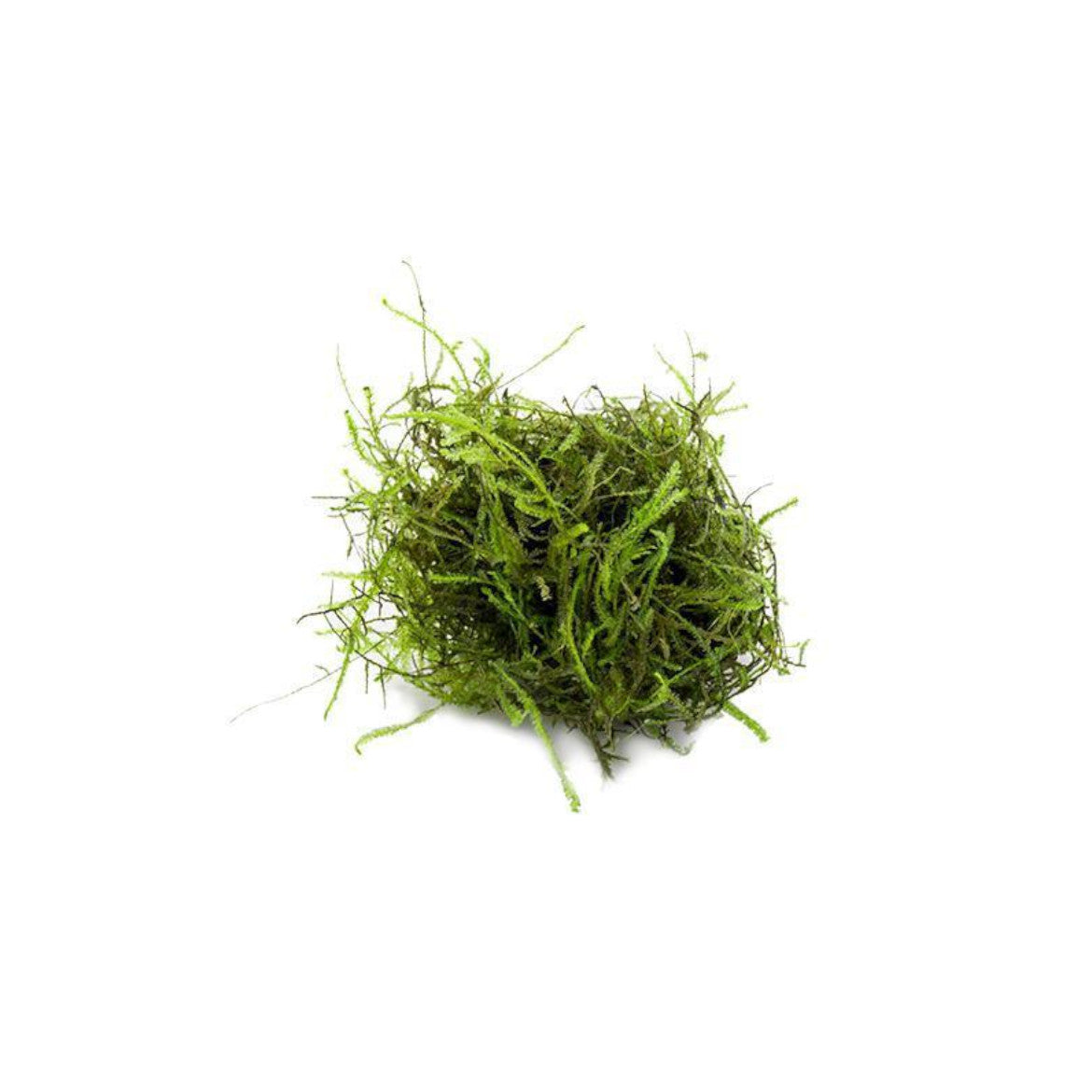
How to Make a Java Moss Wall for a Shrimp Tank
- Cut two mesh panels slightly smaller than the section of aquarium glass you want to cover.
- Rinse the Java Moss in clean aquarium-safe water and remove loose debris.
- Separate the moss into a thin layer. Do not pack one giant clump in the middle.
- Spread the moss evenly across the first mesh panel.
- Place the second mesh panel over it so the moss is lightly sandwiched between them.
- Tie the panels together with fishing line or aquarium-safe thread.
- Attach the wall to the glass with suction cups or aquarium-safe mounting hardware.
- Leave water circulation around the wall instead of pressing a thick mass of moss into a stagnant corner.
Tropica identifies Java Moss as Taxiphyllum barbieri and notes that it grows readily on surfaces, tolerates relatively low light, and can be attached with fishing line or cotton thread until established.
How Thick Should Java Moss Be on the Mesh?
Start thin.
A common mistake is using so much moss that the outer layer grows while the material trapped underneath receives poor light and circulation.
You do not need the wall to look finished on day one. Spread the moss so there are small gaps visible through the mesh. As new shoots grow, they will fill the open areas.

Why Red Cherry Shrimp Love Java Moss
Java Moss does not “feed” shrimp by itself. The real value is the enormous amount of textured surface it creates.
That surface becomes covered with microscopic life and trapped fine food particles that Cherry Shrimp continuously pick through.
Our Red Cherry Shrimp feeding guide explains why mature biofilm is such an important part of their natural grazing behavior.
Does Java Moss Help Baby Cherry Shrimp Survive?
Yes. A dense moss wall creates tiny spaces that newborn shrimplets can enter easily while remaining harder for larger tank mates to access.
It also puts food directly around them. Newly hatched shrimp spend much of their time grazing instead of swimming long distances to find a feeding dish.
For more on feeding the smallest juveniles, see our baby Red Cherry Shrimp feeding guide.
Where Should You Put the Moss Wall?
The back or side glass usually works best. Keep it away from any filter intake that can pull loose strands into the equipment.
Gentle circulation is useful because it keeps oxygenated water moving around the moss without blasting the shrimp off their grazing surface.
If you are choosing filtration at the same time, our sponge filter vs. HOB guide explains how to protect shrimplets and maintain gentle flow.

How Much Light Does a Java Moss Wall Need?
Java Moss is a low-demand plant. Extremely intense lighting is unnecessary and can encourage algae to coat the moss before it fills in.
Use moderate, consistent aquarium lighting and adjust based on growth rather than trying to force the wall to fill instantly.
Tropica describes Java Moss as low-light and low-CO2 demand, which is one reason it works so well in simple Neocaridina tanks.
How Do You Trim a Java Moss Wall?
Once growth becomes thick, trim the outer surface with clean aquarium scissors. Remove loose cuttings immediately so they do not clog filters or establish in places you do not want moss.
Do not cut the entire wall back to the mesh at once. Light trimming keeps the wall dense while preserving mature grazing surface.
Is a Java Moss Wall Good for Berried Cherry Shrimp?
Yes. Berried females often prefer dense protected areas, and the wall becomes even more valuable once shrimplets hatch.
If you are preparing specifically for a female carrying eggs, our berried Red Cherry Shrimp guide explains the egg-carrying and hatching process.
Java Moss Wall FAQ
Is Java Moss good for Cherry Shrimp?
Yes. It creates excellent biofilm surface, hiding cover, molting shelter, and protected grazing areas for shrimplets.
Can Java Moss grow on plastic mesh?
Yes. Sandwiching a thin layer between aquarium-safe plastic mesh panels is one of the easiest ways to create a vertical moss wall.
Does Java Moss need CO2?
No injected CO2 is required for a basic Java Moss shrimp tank. Good water quality, appropriate light, and time are more important.
How long does a Java Moss wall take to fill in?
There is no exact timeline. Growth depends on light, nutrients, temperature, starting amount, and maintenance. Build it thin and allow new growth to fill the gaps naturally.
Should I clean a Java Moss wall?
Do not sterilize it. Gently remove trapped debris when needed and trim excess growth while preserving the mature biofilm the shrimp graze.
Best Java Moss Wall Setup for Red Cherry Shrimp
Use two aquarium-safe plastic mesh panels, spread Java Moss in a thin even layer, secure the panels together, and mount the wall where it receives moderate light and gentle circulation.
Then give it time.
A mature Java Moss wall becomes more useful as it develops biofilm and dense branching growth. Once the tank is fully cycled and stable, you can buy Red Cherry Shrimp online for the finished planted setup.

Source
Tropica — Taxiphyllum barbieri 'Bogor Moss' — Professional aquarium-plant guidance describing Java Moss as hardy, low-demand, capable of growing on surfaces, suitable for attachment with line or thread, and easy to prune.