

Yes—Neocaridina shrimp are among the easiest freshwater shrimp for beginners to keep successfully. Their adaptability, peaceful behavior, small size, and ability to reproduce entirely in freshwater make them a strong first choice for hobbyists who want to start a shrimp aquarium.
But “easy to keep” does not mean maintenance-free.
Neocaridina still need a fully cycled aquarium, stable water chemistry, appropriate mineral content, safe filtration, careful acclimation, and sensible feeding. Most beginner problems happen when hardy shrimp are treated as if they can tolerate an unstable or uncycled tank.
If you build the aquarium correctly before the shrimp arrive, keeping them can be surprisingly straightforward.
If you are choosing your first colony, shop our complete Neocaridina shrimp collection to compare Fire Red Cherry, Blue Dream, Blue Velvet, Orange Sunkist, Yellow Golden Back, Rili, Green Jade, Skittles, and other color varieties.
Why Are Neocaridina Shrimp Good for Beginners?
Neocaridina are easier for new shrimp keepers because they can tolerate a broader range of suitable freshwater conditions than many sensitive ornamental shrimp, particularly soft-water Caridina varieties.
The current Shrimp Up Aquatics Neocaridina collection describes Neocaridina davidi as hardy and beginner-friendly, and our live product pages for varieties such as Blue Dream, Blue Velvet, and Orange Sunkist specifically note their adaptability and ease of care.
That gives beginners more margin for normal aquarium variation—as long as the tank remains stable.
The important word is stable.
A shrimp that can live in a range of pH values can still be stressed if the aquarium repeatedly swings from one end of that range to the other.
1. Neocaridina Adapt to a Useful Range of Water Conditions
For most beginner Neocaridina tanks, you do not need to create an extremely specialized soft-water system.
A practical general range for Neocaridina is approximately:
| Parameter | General Neocaridina Range |
|---|---|
| Temperature | Approximately 68–78°F |
| pH | Approximately 6.8–7.8 |
| GH | Approximately 4–8 dGH |
| KH | Approximately 2–6 dKH |
| TDS | Approximately 150–250 ppm |
| Ammonia | 0 ppm |
| Nitrite | 0 ppm |
Those numbers are starting points, not targets you should chase every day.
The best beginner strategy is to learn what your source water naturally provides, confirm that it falls within an appropriate range, and keep the aquarium consistent.
The U.S. Geological Survey explains that water hardness is largely associated with dissolved calcium and magnesium. These minerals are relevant to shrimp because crustaceans repeatedly build and shed an external skeleton as they grow.
For a deeper explanation of GH, KH, pH, TDS, and stability, use our verified Neocaridina Shrimp Water Parameters Guide.

2. A Fully Cycled Tank Is Still Required
This is where many beginners get into trouble.
Neocaridina may be hardy compared with more delicate shrimp, but they should never be used to cycle an aquarium.
Before adding shrimp:
- Ammonia should be 0 ppm.
- Nitrite should be 0 ppm.
- The biological filter should be established.
- Temperature should be stable.
- The tank should have appropriate mineral content.
The U.S. Environmental Protection Agency explains that ammonia can produce direct toxic effects in aquatic organisms and that pH and temperature influence ammonia toxicity.
A mature tank is even better than a newly cycled tank because established plants, moss, wood, substrate, and filter media provide more biofilm and microscopic grazing.
If this is your first shrimp aquarium, our verified Beginner's Guide to Keeping Neocaridina Shrimp covers the basic tank setup in more detail.
3. Neocaridina Do Not Need a Huge Aquarium
Another beginner-friendly advantage is their small adult size.
A dedicated Neocaridina colony does not require a large aquarium. Small tanks can work, but there is an important tradeoff: the smaller the water volume, the faster temperature and water chemistry can change.
For a first shrimp tank, a 5- to 10-gallon-or-larger aquarium is usually easier to keep stable than a tiny desktop container.
Larger tanks also provide more grazing surface, more room for plants and moss, greater water-volume stability, more room for a growing colony, and easier placement of filtration and hardscape.
4. Neocaridina Are Easy to Feed
Neocaridina spend much of the day grazing.
The University of Florida IFAS profile for Neocaridina davidi describes them as detritivores and opportunistic feeders that consume algae, biofilms, and dead plant and animal material.
In a mature aquarium, shrimp naturally pick at biofilm, soft algae, microorganisms, decaying plant material, and fine organic particles.
Supplemental shrimp foods can provide additional nutrition, but beginners often make the mistake of feeding too much rather than too little.
Uneaten food decomposes. That adds organic waste to the aquarium and can create water-quality problems.
Feed based on colony size and watch how quickly food disappears. A tank containing 10 shrimp should not receive the same amount of food as a mature colony containing hundreds.
5. Sponge Filters Make Beginner Shrimp Tanks Simpler
You do not need complicated filtration to keep Neocaridina successfully.
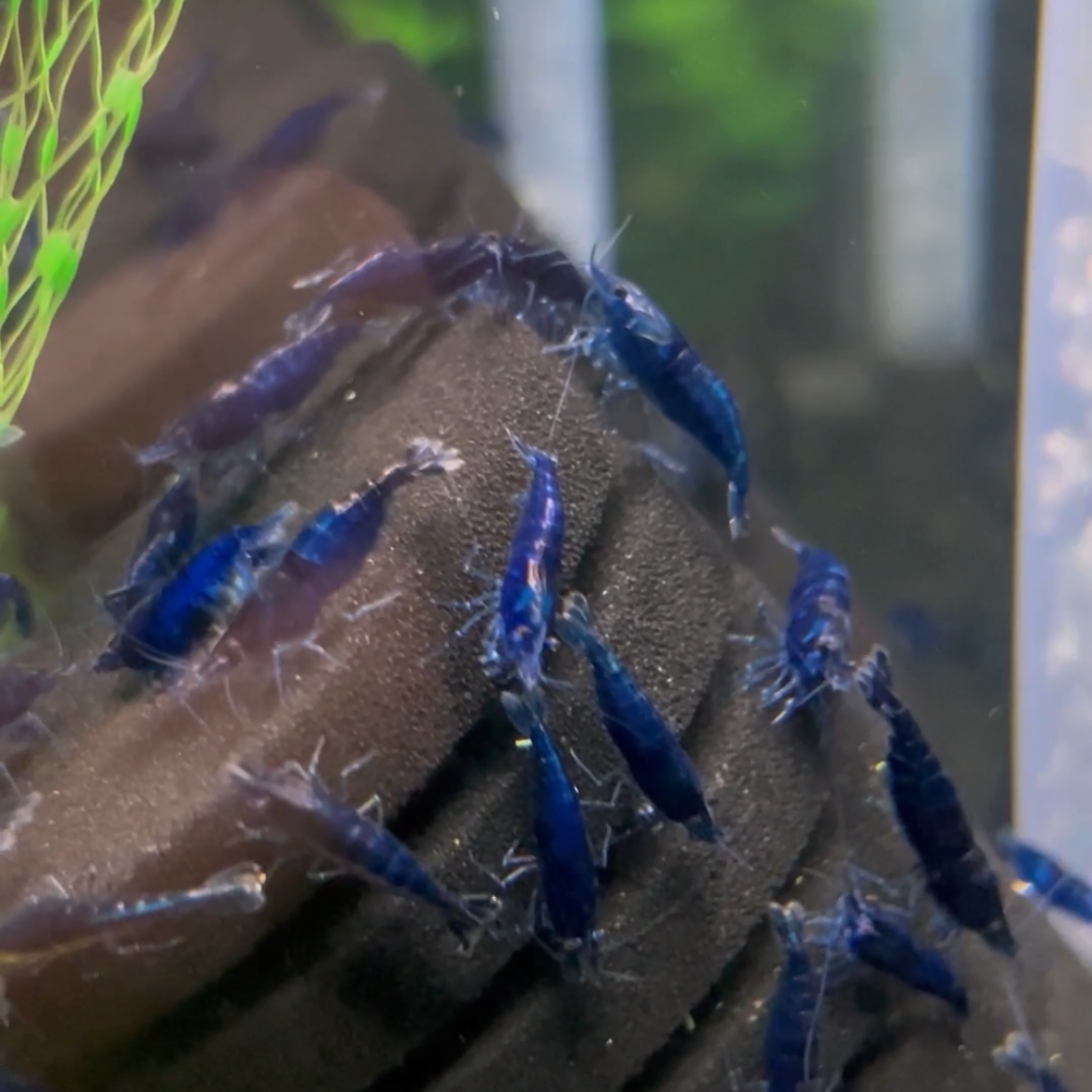
A sponge filter is popular because it combines gentle water movement, biological filtration, oxygenation, a large grazing surface, and reduced risk of sucking tiny shrimplets into an intake.
Hang-on-back and canister filters can also work, but their intakes should be protected with an appropriate sponge or shrimp-safe intake guard if babies are present.
Whatever filter you use, avoid replacing all established biological media at once.
6. Neocaridina Work Extremely Well in Planted Tanks
Live plants are not absolutely required, but they make shrimp keeping easier in several ways.
Plants create surface area for biofilm, provide cover after molts, give newborn shrimplets protected grazing areas, and make the aquarium more visually interesting.
Beginner-friendly options include mosses, Java Fern, Anubias, Cryptocoryne, and many other freshwater aquarium plants.
If you are planning the tank from the ground up, our verified Neocaridina Shrimp Tank Aquascaping Guide covers plants, substrate, hardscape, filtration, color contrast, and breeding-friendly layouts.
7. They Are Peaceful—but Fish May Not Be
Neocaridina are peaceful toward fish, snails, and other shrimp. The problem is usually the opposite direction.
Many fish will eat a shrimp if the shrimp fits into their mouth. Even small fish that ignore adult Neocaridina may consume newborn shrimplets.
If your main goal is to build a breeding colony, a shrimp-only tank is the simplest beginner setup.
8. Acclimation Is One of the Most Important Beginner Steps
A hardy shrimp can still be stressed by a sudden transition between two different water chemistries.
New shrimp may arrive in water that differs from your aquarium in temperature, pH, GH, KH, and TDS.
Do not simply open the shipping bag and pour the shrimp directly into the tank.
Our verified Freshwater Shrimp Acclimation Guide recommends gradually acclimating new shrimp before introduction.
That guide currently recommends temperature acclimation followed by a controlled drip of aquarium water at approximately 1–2 drops per second for 2–3 hours, increasing the water volume to around four times the starting volume before the shrimp are transferred.
9. Neocaridina Breed Easily Once the Tank Is Right
Breeding is one of the most rewarding reasons to choose Neocaridina as your first shrimp.
Female Neocaridina carry eggs beneath the abdomen until miniature fully formed shrimp hatch. You do not need a separate breeding tank if the aquarium is safe for babies.
A species-only tank with mature moss, plants, sponge filtration, and abundant biofilm can allow the colony to expand naturally.
Our verified Complete Neocaridina Shrimp Breeding Guide covers sexing, berried females, shrimplet survival, feeding, colony growth, and managing a breeding population.
10. Molting Looks Scary Until You Understand It
Beginners often see an empty shrimp-shaped shell and assume a shrimp has died. Usually, it is simply a molt.
Shrimp have an external skeleton and must periodically shed it as they grow. A normal molt often looks like a nearly transparent shrimp lying on the substrate.
You generally do not need to remove a clean molt. Shrimp may graze on it afterward.
Healthy molting depends partly on appropriate mineral content, which is another reason GH and overall stability matter.
11. Water Changes Should Be Consistent, Not Extreme
Beginners sometimes hear that shrimp are sensitive and become afraid to perform water changes at all. That is not the goal.
Water changes are an important part of aquarium maintenance. The key is to avoid replacing a huge amount of water with water that has very different temperature or chemistry.
Prepare replacement water properly and keep your maintenance routine consistent. The correct frequency and percentage depend on tank size, colony size, feeding, filtration, plant growth, nitrate accumulation, and source-water chemistry.
12. Which Neocaridina Color Is Best for Beginners?
From a care standpoint, the common Neocaridina color varieties are broadly similar, so your choice can be based mostly on appearance.
Fire Red Cherry Shrimp are an excellent classic first colony because their bright red color is easy to see against green plants.
Blue Dream Shrimp are ideal if you want a deep blue colony.
Blue Velvet Shrimp offer a lighter blue appearance.
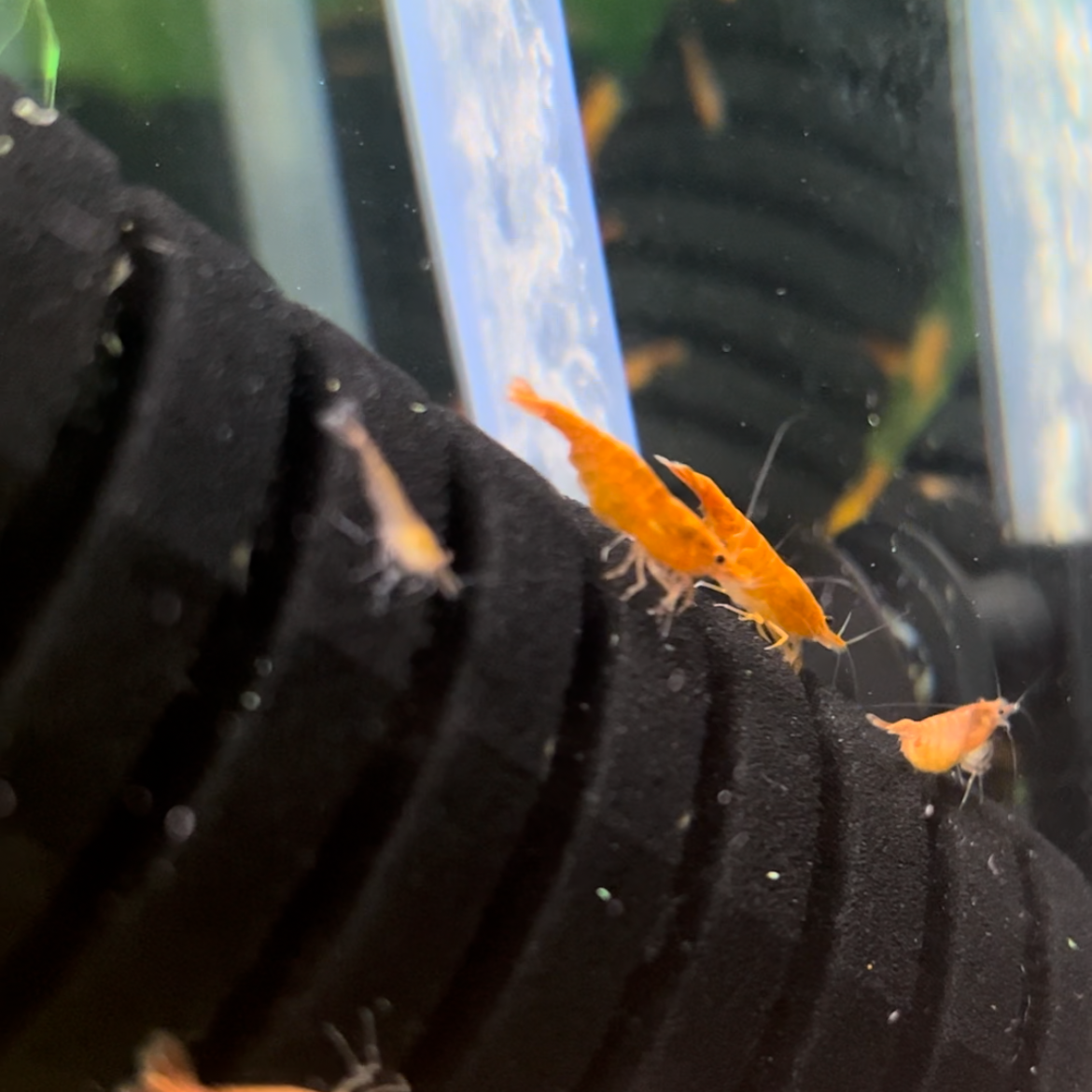
Orange Sunkist Shrimp create strong contrast against green plants and dark substrate.
Rili varieties offer patterned bodies, while mixed assortments can provide multiple colors in one display.
If selective breeding is your goal, keep color lines separate because different Neocaridina varieties can interbreed.

What Makes Neocaridina Difficult for Beginners?
Neocaridina become difficult when the aquarium itself is unstable.
The most common beginner mistakes include adding shrimp before the tank is cycled, overfeeding, constantly adjusting pH, ignoring GH and KH, skipping acclimation, making huge sudden water changes, using an uncovered filter intake, keeping shrimp with predatory fish, adding unverified medications or chemicals, and over-cleaning every biofilm-covered surface.
The pattern behind most of these mistakes is the same: sudden change.
If your tank is cycled, mature, appropriately mineralized, and stable, Neocaridina are much easier to keep.
Simple Beginner Neocaridina Setup
| Item | Beginner Recommendation |
|---|---|
| Tank | 5–10 gallons or larger |
| Filter | Established sponge filter |
| Substrate | Shrimp-safe inert sand or gravel when appropriate for your water |
| Plants | Moss plus easy live plants |
| Hardscape | Wood or rock with grazing surfaces and hiding areas |
| Ammonia | 0 ppm |
| Nitrite | 0 ppm |
| Maintenance | Consistent, moderate, and parameter-matched |
Frequently Asked Questions
Are Neocaridina shrimp easier than Caridina shrimp?
For most beginners, yes. Common Neocaridina varieties generally tolerate a broader range of suitable freshwater conditions than many ornamental Bee and Taiwan Bee-type Caridina, which often require softer water, very low KH, and more specialized water preparation.
Can a beginner keep Cherry Shrimp?
Yes. Cherry Shrimp are one of the classic beginner freshwater shrimp. The tank still needs to be fully cycled and stable before they are introduced.
Do Neocaridina need a heater?
Not always. If your room naturally remains within an appropriate stable temperature range, a heater may not be necessary. A heater becomes useful when the room gets too cold or temperatures fluctuate substantially.
Do Neocaridina need live plants?
No, but live plants make a shrimp aquarium easier to structure and provide valuable grazing surfaces and cover. Moss is especially useful for newborn shrimplets.
Can Neocaridina live in tap water?
Often, yes—but only if the tap water has appropriate chemistry and is properly conditioned when necessary. Test your actual GH, KH, pH, and TDS rather than assuming all tap water is the same.
How many Neocaridina should a beginner start with?
A group of around 10 or more is a practical starting point for someone who wants a visible colony and a reasonable chance of receiving multiple males and females. Larger groups can establish faster when the aquarium has enough mature grazing area.
Do Neocaridina shrimp clean the tank?
They graze on biofilm, algae, detritus, and fine organic material, but they do not replace filtration, water changes, or responsible feeding.
Will Neocaridina breed in a beginner tank?
Yes. If mature males and females are present and conditions are stable, Neocaridina can reproduce readily in freshwater. A species-only tank with moss and shrimp-safe filtration gives babies the best chance of survival.
So, Are Neocaridina Shrimp Actually Easy to Keep?
Yes—when the aquarium is ready before the shrimp arrive.
Neocaridina are one of the best introductions to freshwater shrimp keeping because they combine attractive colors, peaceful behavior, manageable water requirements, simple feeding, and direct freshwater reproduction.
The formula for success is straightforward: cycle the tank completely, let the aquarium mature, keep appropriate water parameters stable, use shrimp-safe filtration, provide plants and grazing surfaces, feed responsibly, acclimate new shrimp gradually, and avoid sudden changes.
Do those things consistently, and Neocaridina are not only beginner-friendly—they can become one of the easiest and most rewarding freshwater colonies to maintain.
Ready to start your first shrimp tank? browse Neocaridina shrimp for sale at Shrimp Up Aquatics and choose the color or pattern you want to build your colony around.
Sources & References
University of Florida IFAS — Cherry Shrimp Neocaridina davidi — Species biology, feeding behavior, biofilm grazing, reproduction, and general husbandry information.
U.S. Geological Survey — Hardness of Water — Background on calcium, magnesium, and freshwater hardness.
U.S. Environmental Protection Agency — Aquatic Life Criteria: Ammonia — Freshwater ammonia toxicity and environmental factors affecting aquatic organisms.